Servants Meeting
- Liturgical Theology
- Liturgical Theology: Theophany Feast
- Preaching & Evangelism
- 2026-02-15: Benefit from the Fast
- Liturgical Theology: Covenant Thursday
- Liturgy of Time: Importance of the Psalms
Liturgical Theology
Introduction
- Takes the slides about "What is ritual" from Liturgical Theology V (Liturgy of Time)
- Then introduce the concept of Liturgical Theology
- Take intro slides from Liturgical Theology I
Liturgy of Time - Introduction
- Characteristics of the Liturgy of Time
- Daily Cycle, Weekly Cycle, Yearly Cycle
- Historical Development (Cathedral vs Monastic Rite
Liturgy of Time - Agpeya I
- Introduction to the Agpeya
- Importance of Praying with the Psalms
- Themes of each hour
- Recurring Prayers (Intro to the Creed, Creed, Trisagion, Holy Holy Holy, Hail to you, Conclusion of Every Hour)
Liturgy of Time - Agpeya II
- 1st Hour
- Let us praise with the angels
- 3rd Hour
- 6th Hour
Liturgy of Time - Agpeya III
- 9th Hour
- 11th Hour
- 12th Hour
- Graciously Accord
Liturgy of Time - Agpeya IV
- Veil
- Midnight Hour
Liturgy of Time - Raising of Incense I
- Use of Incense (OT, NT, Heavenly Church)
- Characteristics of the Raising of Incense
- Ritual Order
- Thanksgiving Prayer
- Verses of Cymbals
- Minor Circuit of Incense
Liturgy of Time - Raising of Incense II
- Litanies (Four)
- Doxologies
- Major Circuit of Incense
Liturgy of Time - Raising of Incense III
- Litany of the Gospel
- Litanies
- Absolution and Conclusion
Liturgy of Time - Weekly Cycle I
- Saturday as the Sabbath and Day of Rest
- Sunday as the Day of the Lord
- Fasting on Wed and Friday
Liturgy of Time - Weekly Cycle II
- Hymnody
- Introduction to Tarteeb el Bay3a
- Concluding Canons and hymns for each day of the week
Liturgy of Time - Weekly Cycle III
- Psalmody - Introduction
- Canticles
- Commemoration of the Saints
Liturgy of Time - Weekly Cycle IV
- Monday
- Tuesday
- Wednesday
Liturgy of Time - Weekly Cycle V
- Thursday
- Friday
- Saturday
Liturgy of Time - Weekly Cycle VI
- Sunday
Liturgy of Time - Yearly Cycle I
- Church Calendar
- Liturgical Calendar
- Introduction to the Lectionary
Liturgy of Time - Yearly Cycle II
- Sunday Lectionary
Liturgy of Time - Yearly Cycle III
- Daily Lectionary
- Great Fast Lectionary
- Holy 50 Days Lectionary
Liturgical Theology: Theophany Feast
Historical Development of the Theophany
Egypt Before Christianity
- Herodotus (Greek Historian c. 5th Century BC): "Egypt is the gift of the Nile"
- The Nile was the source of life for Egyptians - survival depended on the Nile. If the Nile rose and flooded, crops grew, taxes could be collected, society survived. If the Nile didn't rise and flood, then famine followed and society could collapse.
- The Egyptian calendar was based on the cycle of the Nile - three seasons: Inundation (Flooding, Waters), Planting (Seeds), Harvest (Fruits)
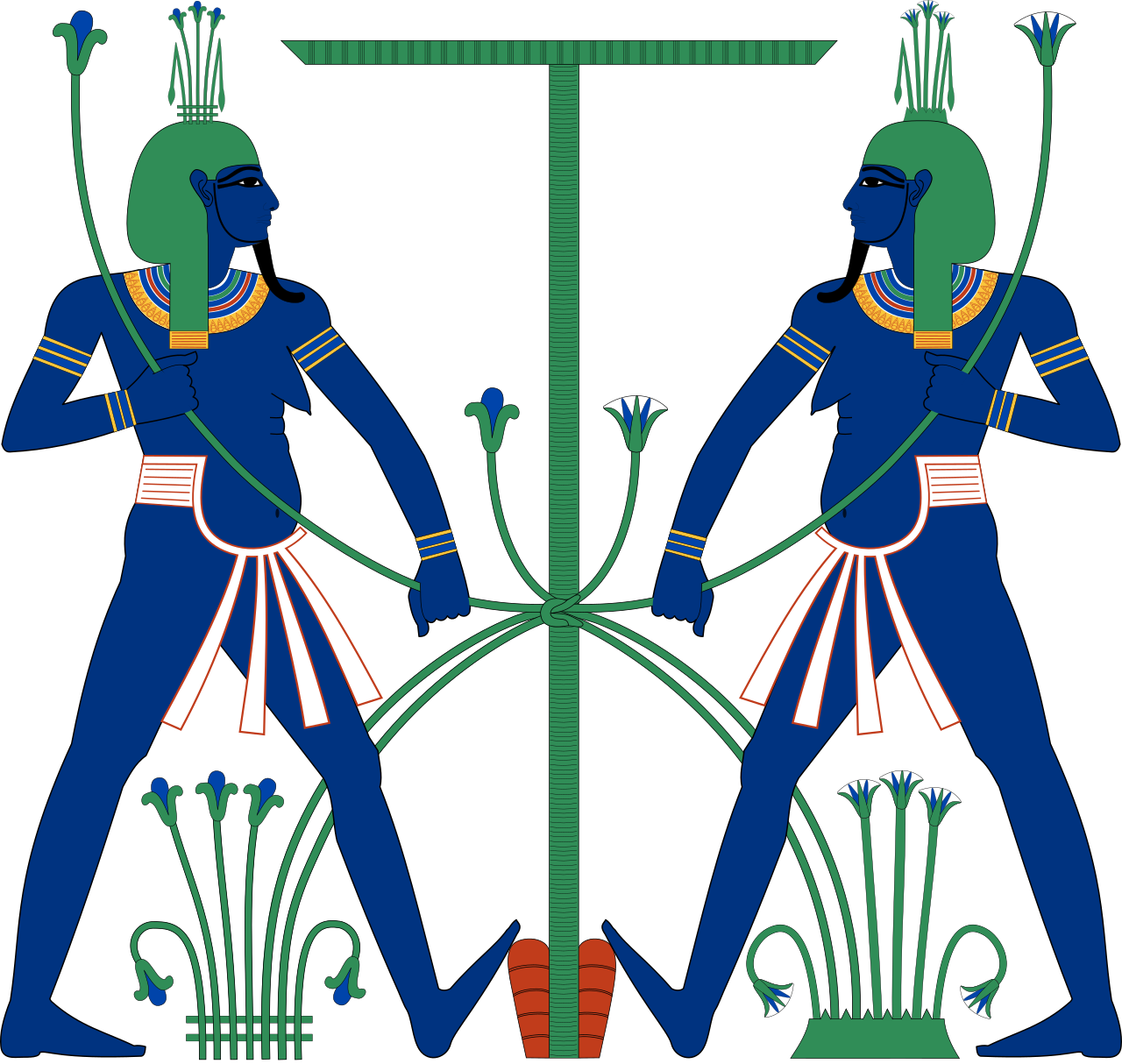
- Hapi - God of the Nile Flood
-

- This is a dual-depiction of Hapi representing Upper Egypt (left - the lotus plant) and Lower Egypt (right - papyrus plant). Blue represents life-giving water. Vegetation, breasts, belly symbolize fertility.
-
- The Nile was celebrated by procession, offerings, festivals, etc.
1st Century
- Christianity entered Egypt and did not abolish Egypt's ancient reverence for the Nile, but instead transformed it by giving it Christian meaning.
- Nile gives life? Christ is the giver of life
- Flood renews the land? Baptism renews creation
- Hapi provides abundance? God blesses the waters
- Nile maintains order? Christ restores true order
2nd-3rd Century
- Earliest documented celebration of this Feast in Egypt is reported by St Clement of Alexandria (150-215 AD)
- "And the followers of Basilides hold the day of His baptism as a festival, spending the night before in readings. And they say that it was the fifteenth year of Tiberius Caesar, the fifteenth day of the month of Tubi; and some that it was the eleventh of the same month." (The Stromata, Book 1)
- Basilides: Gnostic leader (120-140 AD)
- Celebrating Theophany (Epiphany) as multiple epiphanies of Christ:
- His Nativity according to the flesh
- His Baptism in the Jordan
- (In some places) His first miracle at Cana of Galilee
- Rising Gnosticism taught that:
- Matter is evil or corrupt, only spirit is good
- Thus, God could not POSSIBLY have taken flesh
- At the baptism of Christ, the Divine Logos descended upon the human Jesus temporarily
4th Century
- The Nativity Feast is celebrated separately from Theophany
- The Nativity Feast became a witness to the correct doctrine:
- Christ was born and took real flesh
- Matter is not evil or corrupt, but is redeemable
- Theophany's focus is now on the events of the Baptism of Christ and His Sanctification of the Waters
- This also refutes Gnostic ideas since water is material; it is sanctified by Christ
- Theophany becomes one of the days for administering baptism (with Pascha and Pentecost)
- "And consider how Solomon reproves you who are too idle or lethargic, saying, 'How long will you sleep, O sluggard, and when will you arise out of your sleep? You rely upon this or that, and "pretend pretenses in sins;" I am waiting for Epiphany; I prefer Easter; I will wait for Pentecost. Is it better to be baptized with Christ, to rise with Christ."
- St Gregory Nazianzen in Oration 40 is attempting to convince people to be baptized and to stop delaying
5th Century
- Rituals for Sanctification of the Nile
- St Shenouda the Archimandrite and his disciple Abba Wise do a sanctification of the Nile waters
- Water may be brought from the Jordan River (Palestine) and used to sanctify the Nile River
- Theophany is celebrated with lighting torches, processions, dipping into the Nile, etc. around 10pm
- There are 3rd and 5th Century sources that say that the Lord was baptized in the night and that at 10pm is when the heavens opened
- After celebrating the sanctification of the Nile and dipping in, they would go back to the Church for the Vigil and Liturgy of the Feast
10th Century
- Fatimid Caliph Al-Hakim bi-Amr Allah persecuted the Christians and forbade Christians from celebrating Theophany on the banks of the Nile
- Christians are forced to celebrate inside, so they develop large fonts ("maghtas") - this is also the origin of the baptismal font
- Later on, in the 20th Century, the large fonts will be replaced with lakkan basins
The Baptism of Christ
Circumcision and Baptism
- Circumcision came as a sign of the covenant made between God and Abraham in Genesis 17
- A Covenant has two sides - on God's side, He will establish the descendants of Abraham as a nation, He will give them the land of Canaan as an everlasting possession, and He shall be their God. On Abraham's side, they must be circumcised
- God deigned to bring salvation upon the world through the incarnation of the Logos IN THE BEGINNING. And He foreknew everything.
- Part of this economy of salvation was that God would not take one of the existing nations and become their God - for example, He did not go to the Canaanites and become their God. He did not go to the Hittites or the Amorites or the Amalekites. Of the 70 nations listed in Genesis 10, the descendants of Noah and those that were scattered after Babel, God did not choose any of those families. But rather, He chose Abraham and brought from him a new family. God's family. And Circumcision would be the sign of participation or membership in this family. It would be a sign that you forsake everything else and become one of God's family.
- Circumcision was participation with God in His covenant with Abraham
- Together with the Passover, they are a sign that you forsook everything else and became part of God’s family
- “And when a stranger dwells with you and wants to keep the Passover to the Lord, let all his males be circumcised, and then let him come near and keep it; and he shall be as a native of the land. For no uncircumcised person shall eat it.” (Exodus 12:48 NKJV)
Where did Baptism Come From?
- If you read the Old Testament, you won't see baptism mentioned anywhere.
- We have types of it like Noah's flood and Moses' crossing the Red Sea and Joshua's crossing the Jordan River - salvation through water.
- We have other hints like the four rivers that flow into the Garden of Eden that water the Tree of Life, or the Spirit of God that hovered over the waters in the beginning.
- But Baptism itself is not a regular practice in the Old Testament.
- In the New Testament, St John the Baptist started to baptize people in the Jordan a baptism of repentance
- Actually, this was not an abnormal practice
- By the time of the New Testament there are a lot more Jews than before - a lot of people who have a lot of ritual washings to practice. They had the idea of Ritual Impurity and before you could become ritually clean, you had to offer sacrifices and you had to have ritual washings.
- Around the time of the Hasmoneans, many Jews would come for pilgrimage on the feasts and required ritual washing to enter the Temple
- When Herod renovated the Temple, he added many pools (including Solomon’s pools, including expanding the Pool of Siloam)
- But there were so many people that it would have been impossible for everyone to wash every day
- So they setup in the Temple several pools that were used for ritual washings. The people would get in in large groups and come out the other side ritually clean.
- So when John started baptizing, people were not surprised by the practice. But what John was doing was very different
- He was baptizing in the Jordan on the other side away from the Temple - some people (especially the Sadducees were offended by this and took it as a sign that John was against the Temple)
- He was baptizing a baptism of repentance - he called the people to "bear fruit worthy of repentance"
- He was announcing the coming of Someone after Him - the Messiah
- He was not doing it on his own authority, but he was instructed to by God
- And John bore witness, saying, “I saw the Spirit descending from heaven like a dove, and He remained upon Him. I did not know Him, but He who sent me to baptize with water said to me, ‘Upon whom you see the Spirit descending, and remaining on Him, this is He who baptizes with the Holy Spirit.’ And I have seen and testified that this is the Son of God.” (John 1:32-34)
- John's role was forerunner - to prepare the way for the Christ
The Baptism of Christ
- The Lord Jesus Christ went to be baptized before beginning His ministry
- He approved of the work that John was doing and asked John to baptize Him, himself
- When Christ entered the water, some things happened:
- The Father spoke from heaven and affirmed that the Lord Jesus is the Son of God, the Messiah
- The Holy Spirit showed Himself as a dove and came upon the head of Christ anointing Him as High Priest, as King, as Prophet. These are the three roles that were expected of the Messiah.
- When the Holy Spirit came upon the Lord, He opened the door for God the Holy Spirit to dwell in humanity, Who we will accept on the day of our Baptism
- Christ, in the water, conquered the demons and the chaos and renews the Creation
- "You have crushed the heads of the dragon hidden therein [in the Jordan]" (Lakkan Liturgy of Water)
- "You divided the sea by Your strength; You broke the heads of the sea serpents in the waters. You broke the heads of Leviathan in pieces" (Psalm 74:13 - used in the Tasbeha Canticle for Theophany)
- Creation in Genesis 1 came "out of the waters"
- God's salvation for Israel through the Red Sea is a type of "new Creation"
- Christ sanctifies the NATURE of water (St John Chrysostom)
Themes of the Theophany
The Manifestation of the Holy Trinity
"This is My beloved Son in whom I am pleased. He has performed my will; obey Him, for He is the Giver of Life." - Verses of the Cymbals
"You have seen the Holy Spirit • coming down from heaven • and you have heard the voice of the Father • proclaiming and saying: •
'This is My beloved Son • with whom My soul is well pleased • He does My will; hear Him • for He is the Life-giver." - Second Doxology
The Sanctification of the Waters
"The sea beheld and fled, • and the Jordan turned away. • O sea, why have you fled? • Stand firm that you may be blessed. •
Behold the waters have seen • the Maker and Creator • and they feared; • agitation and confusion overtook them." - First Doxology
"The only-begotten God • came to the Jordan • and the portrait that was destroyed • and ruined by sin, •
He restored it once again • by the baptism of water; • He demolished the head of the dragon • upon the waters of the Jordan." - Second Doxology
Veneration of St John the Baptist
"A proud name is your name, • O kinsman of Immanuel. • You are great among all the saints, • O John the Baptist" - Verse of Cymbals, ⲟⲩⲣⲁⲛ ⲛϣⲟⲩϣⲟⲩ
All of the Theophany Psalis
Rite of the Theophany
The Readings
| Paramoun Vespers | Matthew 4:12-22 | Jesus beings His ministry; prophecy from Isaiah "The people who sat in darkness have seen a great light..." |
| Paramoun Matins | John 3:22-29 | John the Baptist exalts Christ ("He who has the bride is the bridegroom; but the friend of the bridegroom, who stands and hears him, rejoices greatly because of the bridegroom's voice. Therefore this joy of mine is fulfilled." |
| Paramoun Liturgy | Luke 3:1-18 | John preaches to the people |
| Feast Vespers | Matthew 3:1-12 | John the Baptist Prepares the Way |
| Feast Lakkan | Matthew 3:1-17 | John the Baptist Prepares the Way; John Baptizes Jesus |
| Feast Matins | Mark 1:1-11 | John the Baptist Prepares the Way; John Baptizes Jesus |
| Feast Liturgy | John 1:18-34 | John's testimony of Christ |
| Second Day Vespers | Luke 3:21-22 | John Baptizes Jesus |
| Second Day Matins | Matthew 3:13-17 | John Baptizes Jesus |
| Second Day Liturgy | John 1:35-51 | "Behold the Lamb of God" - |
Theophany Paramoun
The Rites of the Paramoun are identical to that of the Nativity.
Theophany Feast
- Vespers Praises & Vespers if the Feast is on Sunday or Monday (because it means the Paramoun was prayed early)
- Veneration for St John the Baptist
- Midnight Praises
- Great Canticle
- Midnight Alleluia
- 7 & 4 - Psali and Exposition for each Theotokia
- Liturgy of the Waters (Lakkan)
- On Covenant Thursday and Apostles' Feast, the Lakkan is prayed AFTER Matins (as all church services are - wedding, baptism, etc.). On Theophany it is prayed before Matins. This is a remnant of the original practice that the Nile waters were sanctified and THEN the people went to Church to pray the Feast
- Matins
- Like Nativity and Resurrection Feasts
- Divine Liturgy
Lakkan
Order of Lakkan
- Thanksgiving Prayer, Incense, Verses of Cymbals
- Prophecies
- Incense & Pauline
- Ⲟⲩⲣⲁⲛ ⲛϣⲟⲩϣⲟⲩ, Ⲡⲁϭⲟⲓⲥ and Trisagion
- Psalm & Gospel
- Ⲫⲛⲟⲩϯ ⲛⲁⲓ ⲛⲁⲛ
- Gospel Response
- Litanies (Sick, Travelers, Seasons, Leaders, Departed, Oblations, Catechumens)
- Supplications
- Litanies (Peace, Fathers, Assemblies) - Can be Inaudible
- Creed
- Aspasmos Adam
- Anaphora
- Absolutions
- Distribution
- Concluding Prayer
Prophecies
- Habakkuk 3:2-19
- Christ sanctifies the Creation through His Baptism
- "The everlasting mountains were scattered, the perpetual hills bowed"
- "You walked through the sea with Your horses, through the heap of great waters"
- God reveals Himself in the Theophany
- Baptism
- Christ sanctifies the Creation through His Baptism
- Isaiah 35:1-2
- "The desert shall blossom abundantly and rejoice"
- "The glory of Lebanon shall be given to it" - Lebanon is known for cedar (trees). So if the glory of Lebanon is given to a desert, that means the desert that was dry and dead will become fruitful and full of life - symbol of baptism, but also of water.
- Isaiah 40:1-5
- "The voice of one crying in the wilderness: 'Prepare the way of the Lord; make straight in the desert a highway for our God.'"
- "The glory of the Lord shall be revealed... for the mouth of the Lord has spoken."
- Isaiah 9:1-2
- "Beyond the Jordan. In Galilee of the Gentiles. The people who walked in darkness have seen a great light; those who dwelt in the land of the shadow of death, upon them a light has shined."
- Baruch 3:36-4:4
- Ezekiel 36:24-29
- "I will sprinkle clean water on you, and you shall be clean; I will cleanse you from all your filthiness and from all your idols. I will give you a new heart and put a new spirit within you; I will take the heart of stone out of your flesh and give you a heart of flesh. I will put My Spirit within you and cause you to walk in My statutes, and you will keep My judgments and do them."
- Ezekiel 47:1-9
- "Then he brought me back to the door of the temple; and there was water, flowing from under the threshold of the temple toward the east, for the front of the temple faced east; the water was flowing from under the right side of the temple, south of the altar... he brought me through the waters; the water came up to my ankles... the water came up to my waist... the water was too deep, water in which one must swim; a river that could not be crossed.
Anaphora
- Addressed to the Son
- Meet and Right
- Focuses on the Son as Creator, who created all from nothing, and to whom all Creation submits
- Ⲁⲅⲓⲟⲥ
- Focuses on the Incarnation
- "come to the likeness of men"
- "were not pleased to behold the human race overpowered by the devil. Behold, You have come and saved us."
- "You have blessed the natural births and purified the virginal womb by Your birth"
- "You, while still God, did show Yourself upon the Earth and walked among men."
- Focuses on the Incarnation
- Sanctification
- Invoking the Holy Spirit
- "Sanctify this water"
- "A loosing from sins"
- "A chaser away of diseases"
- "A terror unto demons"
- "May all who drink from it obtain purity of soul, spirit, and body"
- Renewal of our nature by water and Spirit
- The water of Noah
- The water of Moses (The Red Sea)
- The water of Elijah
- Invoking the Holy Spirit
- Concluding Prayer
- "You have made us worthy to fulfill this holy mystery."
- "Reveal to us the knowledge of this mystery."
- The Lakkan is a Mystery! A Sacrament! Per HEMY, it falls under the Sacrament of Repentance and Confession
Preaching & Evangelism
In the Name of the Father, and the Son and the Holy Spirit. One God. Amen.
Who, What, Where, When, How of Evangelism
Introduction
Background
The first idea for this topic came over a year ago after the 2024 OCAD. Many of our youth - most are servants - came to me in the Youth Meeting and talked about their struggles at OCAD. They felt ill-equipped for some of the conversations that happened or the people who approached the table. Some were even discouraged at the end of the day...
At the same time, there was a lot of excitement around OCCM and the influx of catechumens and the potential to baptize youth. And a lot of excitement about bringing catechumens and inviting them to every meeting and every convention and every outing, etc. but without seeking any guidance.
And there were several other interactions that I had with various youth since then that felt a little off...
One time there was a guy who came into the Church because he was just looking for someone to talk to. He wanted to talk to the priest... so I sat with him for a little while in private, and then he left. That evening, I heard the youth talking and excited and someone asked me about "the new catechumen."
One time I was telling the youth on Thursday that we have a baptism tomorrow before liturgy, try to make it! And there were excited faces as they asked "is it an adult baptism??" But a look of disappointment when I said "no, it's a baby."
We all rejoice when there is a new member in the Body of Christ, and when someone has gone through the catechism and decided to dedicate his life to Christ and to the Orthodox life. But the process itself requires a lot of wisdom and a lot of cooperation with the Holy Spirit to do it right.
At the same time, many youth - and especially young men - are coming to the Orthodox Church inquiring and seeking. Many of them are seeking something different than what the society in the US has to offer... the society is emasculating them and diminishing their value because they are men. So how are we to interact with these people? How are we to respond to them? Should we just baptize everyone who comes our way? Will that save them?
These are some of the ideas we will discuss in this Retreat
First topic: Who, What, Where, When, How of Evangelism
Second topic: Characteristic of the Evangelist
What is Evangelism
We'll start with the word itself: Evangelism.
εὐαγγελίζω - euangelizō - Evangelism - Preaching the Gospel
εὐαγγέλιον - Good News - (eu = good, angelion = message (like angelos = messenger))
Gospel - Godspel - God (Good) Spel (News, Narrative, Speech - reciting/speaking something)
Evangelism refers to the preaching or spreading of the Gospel - good news.
- Every time that I give a sermon, I am preaching the Gospel == I am Evangelizing.
- Every time I give a Sunday School lesson, I am preaching the Gospel == I am Evangelizing.
Why?
Why Preach the Gospel?
(See “The Harvest is Plentiful”)
- Evangelism is a Commandment
- ”Go into the world and preach the gospel to every creature” (Mark 16:15)
- ”As You sent Me into the world, I also have sent them into the world.” (John 17:18)
- ”You are the light of the world. A city that is set on a hill cannot be hidden.” (Matthew 5:14)
- ”You are the salt of the earth; but if the salt loses its flavor, how shall it be seasoned? It is then good for nothing but to be thrown out and trampled underfoot by men.” (Matthew 5:13)
- Evangelism is Love
- If we love God, then we must love our neighbor; and if we love our neighbor, then we must care for their salvation. We would do all we can to rescue them!
- Evangelism is the Mission of the Church
- The Book of Acts!
- Some people say that the time of Evangelism is ended… that’s preposterous!
- ”And other sheep I have which are not of this fold; them also I must bring, and they will hear My voice; and there will be one flock and one shepherd.” (John 10:16)
- Evangelism is the Outcome of the New Life
- Evangelism is for the sake of those we are serving… I don’t gain anything from it. Is that not the outcome of my dedication to the New Life of Baptism? Is that not denying myself, taking up my cross and following Him?
- Evangelism is the Greatest Mission
- Think of worldly missions… a doctor is trying to prolong life. A lawyer or judge is trying to bring about justice. A Software developer is trying to facilitate communication and knowledge. Artists are trying to bring joy to people.
- All of this is temporary… but the mission of the Evangelist is eternal life. So it is greater than those other missions.
"Go therefore and make disciples of all the nations, baptizing them in the name of the Father and of the Son and of the Holy Spirit, teaching them to observe all things that I have commanded you; and lo, I am with you always, even to the end of the age." (Matthew 28:19-20)
"But you shall receive power when the Holy Spirit has come upon you; and you shall be witnesses to Me in Jerusalem, and in all Judea and Samaria, and to the end of the earth.” (Acts 1:8)
St John Chrysostom - "There is nothing colder than a Christian who does not try to save others."
Are we Slacking? Why doesn't Orthodoxy recruit? Why doesn't she advertise? Why doesn't she evangelize the way others do? Why doesn't she simplify? Why doesn't she scale?
A world saturated with marketing, messaging and "growth strategies" Orthodoxy is obscure...
- Quiet Churches
- Long services
- No Slogans
- Not compromising in its teachings
- Entrance requires time, patience and submission to a way of life
The Church is NOT an organization or an institution... it is not a place that is trying to have many numbers and big quantity, but it is a place focused on quantity. It is the Body of Christ - not metaphorically, but literally. And it accepts members who want to join it, and then heals them. The Church is a hospital for sinners - when the sinners approach the Church, they get the treatment they need through the Sacraments.
John 6
What?
Why Bring People In?
Activity: Why do you want to bring others into the Church?
Some say "I don't want them to go to Hell."
- "if you don't do xyz you will go to Hell." It boils down my relationship with God to be that of a slave - owner. I obey because of fear of punishment. This is preaching a fear (scaredness) of God.
Some say "I want them to have a Heavenly Reward."
- "If you do xyz you will get all these blessings and reward" This boils my relationship with God to that of an employer-employee. I obey because of anticipating a reward.
According to St Basil, both of these are missing the mark...
- “Who can please God? Either we please Him fearing tortures and then we are in the state of a slave; or we fulfill the commandments of God in hope of reward, for our own benefit, and therefore we are like hirelings; or we do good for the sake of good itself, and then we are in the state of a son. For, when a son reaches mature age and reason, he fulfills the will of his father not because he fears punishment, and not in order to receive a reward from him, but because he cherishes a special love for him and reveres him as his father, he loves him and is convinced that all the possessions of his father belong to him also. Such a one is able to hear (Gal. 4:7), Therefore you are no longer a slave but a son, and if a son, then an heir of God through Christ. Surely he no longer fears God, as we have said, by that initial fear, but he loves Him, as also St. Anthony said, "I no longer fear God, but I love Him."
Activity: What is the Gospel Message?
- Every religion, every faith, every worldview, has and tries to answer these questions about the human condition:
- What is the problem? (undesired effect) - symptoms
- What is the cause of the problem? (undesired cause) - diagnosis
- What is the solution? (desired effect) - prognosis
- What is the way to the solution? (desired cause) - treatment plan
- Plato
- Problem: Vice, we are not good
- Cause: Ignorance
- Solution: Virtue, be good
- Way to Virtue: Knowledge (opposite of cause)
- Buddha
- Problem: Suffering
- Cause: Greed and Selfish Desire
- Solution: Extinction of the Selfish desire (Nirvana)
- Way of extinction: "Noble eightfold path" of purification
- Marxism
- Problem: Alienation
- Cause: Capitalism
- Solution: Classless Society
- Way to Solution: Socialism
- Freud
- Problem: Neurosis & Psychosis
- Cause: Conflict between identification and superego
- Solution: Balanced Personality
- Way to Solution: Psychoanalysis
What is the Gospel?
- "Now after John was put in prison, Jesus came to Galilee, preaching the gospel of the kingdom of God, and saying, "The time is fulfilled, and the kingdom of God is at hand. Repent, and believe in the gospel." (Mark 1:14)
- Whenever Christ met someone, He was turned that meeting into an encounter with God's Kingdom. He would enter into a conversation or respond to a question or an obvious need, and begin opening that person to the presence of God. He never talked down to or judged the person He encountered, and He never pushed them to do anything.
- Samaritan Woman - He led gently, point by point, to a recognition of who He was
- Wealthy Young Man (Matthew 19:16-30) - could not accept the call to follow Jesus, the Lord was saddened by his reaction but did not condemn him
- Nicodemus - His conversation with Nicodemus was presenting the Gospel of the Kingdom to Him
- NOTE: Might need an appendix on the Syro-Phoenician Woman
- How can we, who are fallen and living in sin, enter this holy and eternal Kingdom?
- Christian Answer (Good News)
- Problem: Death
- Cause: Sin
- Solution: Life
- Way to Solution: Christ
- Christ
- "I have come that they may have life, and that they may have it more abundantly." (John 10:10)
- "as sin reigned in death, even so grace might reign through righteousness to eternal life through Jesus Christ our Lord." (Romans 5:21)
- The preaching and evangelism of the Apostles in the 1st Century was three focuses: Christ Died, Christ is Risen, Christ will Come Again.
- Christ Died for Us
- "For when we were still without strength, in due time Christ died for the ungodly. For scarcely for a righteous man will one die; yet perhaps for a good man someone would even dare to die. But God demonstrates His own love toward us, in that while we were still sinners, Christ died for us." (Romans 5:6-8)
- We were separated from God, but Christ died that we may be reconciled with Him
- Christ is Risen
- If Jesus had come, shared life with us, and then died... it would have been a story of great tragedy, but we would not be restored to God
- Christ is risen from the dead, trampling down death by death, and gave eternal life to those who were in the grave
- Christ will come again for Us and for Our Salvation
- This focus was so strong that some first-century believers expected it to happen any day now. Some of them stopped working and were living off of others (Thessalonica) and St Paul had to remind them that the Second Coming would occur in God's good time
- 2 Thessalonians 3:6-15
- Christ will do two things:
- Judge the living and the dead, determining who will go to Paradise (sheep) and who will go to Hades (goats)
- Matthew 25:31-33
- Bring about the final reconciliation between God and His Creation
- Revelation 21:1-4
- Judge the living and the dead, determining who will go to Paradise (sheep) and who will go to Hades (goats)
- This focus was so strong that some first-century believers expected it to happen any day now. Some of them stopped working and were living off of others (Thessalonica) and St Paul had to remind them that the Second Coming would occur in God's good time
- The Gospel Message is very simple. It's not complicated apologetics. It's not theological minutiae.
- Sometimes our evangelism is talking about other things...
- Why Orthodoxy is the True Church
- Icons
- Councils
- Styles of Worship
- Ecumenical Councils
- We conflate Evangelism and Catechism, preaching up front what should not be taught until someone has decided to join and are being shepherded into the Church.
- Evangelism is about taking those first steps toward a relationship with God - proclaiming that God is with us. If we are not preaching Christ, but instead trying to persuade people, we will fail.
- Sometimes our evangelism is talking about other things...
How?
How to Preach Christ
- Luke 4:17-21 - Christ goes to the Synagogue where He reads from Isaiah. He closes the book, gives it to the attendant, sits down. And He says "Today this Scripture is fulfilled in your hearing."
- Apostles did the same thing... go to the Synagogue, read the Scripture of the Jews, and answer them: "This prophecy is fulfilled in Jesus Christ."
- St Paul did the same things... passing through the pagan city of Athens... "Men of Athens, I perceive that in all things you are very religious; for as I was passing through and considering the objects of your worship, I even found an altar with this inscription: TO THE UNKNOWN GOD. Therefore, the One whom you worship without knowing, Him I proclaim to you." (Acts 17)
- St Mark did the same thing...
- St John did the same thing... Greek Philosophy taught the concept of Logos - the universal mind, the divine reason, the source of all truth; Stoicism saw Logos as the active and rational principle that organizes, permeates and governs the entire cosmos. So what did St John say? "In the beginning was the Logos, and the Logos was with God, and the Logos was God. He was in the beginning with God." (John 1:1-2). You are looking for the Logos? I'm here to tell you that the Logos is Jesus Christ.
- Evangelism in the Early Church - Michael Green
- "The content of their proclamation was none other than the person of Jesus Christ. They made use of all the cultural and intellectual pathways which would facilitate the reception of this message. Intensely sensitive to the felt needs of the listeners, the thought world in which they moved, the very language which would strike the clearest note in their minds, their aim nevertheless remained both simple and direct; to introduce others to Jesus Christ. It is the same if we are listening to the apostle Paul on Areopagus or the monk Macarius in the Egyptian deserts." (pp. 383-384)
- St Paul met them where they were at
- “For though I am free from all men, I have made myself a servant to all, that I might win the more; and to the Jews I became as a Jew, that I might win Jews; to those who are under the law, as under the law, that I might win those who are under the law; to those who are without law, as without law (not being without law toward God, but under law toward Christ), that I might win those who are without law; to the weak I became as weak, that I might win the weak. I have become all things to all men, that I might by all means save some. Now this I do for the gospel’s sake, that I may be partaker of it with you.” (1 Cor 9:19-23)
- “For though I am free from all men, I have made myself a servant to all, that I might win the more; and to the Jews I became as a Jew, that I might win Jews; to those who are under the law, as under the law, that I might win those who are under the law; to those who are without law, as without law (not being without law toward God, but under law toward Christ), that I might win those who are without law; to the weak I became as weak, that I might win the weak. I have become all things to all men, that I might by all means save some. Now this I do for the gospel’s sake, that I may be partaker of it with you.” (1 Cor 9:19-23)
How the Church Preaches the Gospel
The Church has a responsibility towards every single person in the world - not only toward the believers. Three groups of people in the world. Active Believers, Lost Sheep (who are believers but are lost) and the Non-believers.
"But you shall receive power when the Holy Spirit has come upon you; and you shall be witnesses to Me in Jerusalem, and in all Judea and Samaria, and to the end of the earth" (Acts 1:8)
The Church service can be classified into three ministries - Jerusalem, Samaria, End of the Earth:
- Ministry of Spiritual Care (Active Members)
- Preventative: How to prevent them from being lost
- Nurturing: How to nurture them to grow into spiritual maturity
- Ministry of the Lost Sheep
- Outreach: Searching for the Lost Sheep
- Healing: The Lost Sheep who returns will be full of wounds - how to accept him and prepare a godly and therapeutic atmosphere to promote his healing
- Ministry of Evangelism (Non-Believers)
- Preaching the Gospel
- Grafting (Catechism)
- Preaching the Gospel
What about Apologetics?
- Apologetics is more of a discipline than a formal "service." It is relevant in ALL categories of church service.
- 1a because it's tackling difficult topics that may arise in the future.
- 1b and 3b because it prepares faithful to be able to "give a defense"
- 2a & 2b because many of Lost Sheep drift because of doubt, intellectual confusion, etc.
- 3a because when preaching the gospel, some may desire to debate or to raise points of confusion
- There is a BIG difference between Apologetics and Preaching & Evangelism
- Although Apologetics involves "Speaking the truth in love" (Ephesians 4:15), it is focused more on an intellectual or logical discussion, debate. That's why it's only ONE component of any service - because the pastoral is MORE important
- Apologetics can help someone overcome any intellectual barriers to the faith, but it CANNOT (on its own) bring someone to the faith.
Who?
Who is the Evangelist?
Tomorrow we will discuss the characteristics of the Evangelist, but for now it suffices to know that NOT EVERYONE is called to Evangelize in every way or at all times.
All Christians are called to Evangelize by our good deeds, actions, words, manner of speech, manner of dress, modesty, virtue, etc.
NOT All Christians are called to Evangelize by the word…
“And He Himself gave some to be apostles, some prophets, some evangelists, and some pastors and teachers, for the equipping of the saints for the work of ministry, for the edifying of the body of Christ” (Ephesians 4:11)
On top of that, some wisdom is needed when getting into Debates or Discussions. These require a different setting (e.g. NEVER Alone, NEVER with Multiple People). I have heard from many of our youth: “I attend a Bible Study with my Protestant friends and I am trying to bring them to the fullness of the faith.” What can come out of this setting? And it’s usually someone who is NOT consistent with Sunday School or Bible Study or even Liturgy. And as they are “trying to bring people” they are getting further and further from the Church. They are having more and more questions.
NOT All Christians are called to Evangelize by the word, and the one who is, needs some characteristics and some preparation which we will talk about tomorrow.
Where?
Where to Evangelize
"But you shall receive power when the Holy Spirit has come upon you; and you shall be witnesses to Me in Jerusalem, and in all Judea and Samaria, and to the end of the earth" (Acts 1:8)
- Jerusalem: Your circle; your workplace; your school/classes
- "Let your light so shine before men, that they may see your good works and glorify your Father in heaven." (Matthew 5:16)
- By your good deeds, clean language, modesty in dress, high moral standard, smile, peace even in tribulation, joy even in suffering, patience even with a difficult personality
- We, as Christians, permeate our society...
- Careers: Medical Field, Engineering, Retail, Real Estate, Business, Law, etc.
- Hobbies: Gyms, Fields/Clubs, Stores,
- Think of all the places you go, all the people you interact with... how many of them do you see regularly? How many see something different in you?
- Like Christmas lights
- Careers: Medical Field, Engineering, Retail, Real Estate, Business, Law, etc.
- We will be asked...
- "What is the reason for the hope that is in you?"
- "How are you able to smile so much?"
- "How are you able to be so patient with that person (e.g. my boss, my coworker, my employee, etc.)?"
- "Why aren't you eating meat?"
- "Why aren't you going out drinking with us?"
- "What are you doing this weekend?" - "What did you do last weekend?"
- "Let your light so shine before men, that they may see your good works and glorify your Father in heaven." (Matthew 5:16)
- Judea and Samaria: Your community
- "Come and See" - needs someone to "Go and Tell"
- E.g.
- Nursing Homes
- Prisons
- Orphanages
- Women's Shelters
- Homeless Shelters
- Find those who are "in need" and show them Christ, who will satisfy their needs
- “The Spirit of the Lord is upon Me,
Because He has anointed Me
To preach the gospel to the poor;
He has sent Me to heal the brokenhearted,
To proclaim liberty to the captives
And recovery of sight to the blind,
To set at liberty those who are oppressed;
To proclaim the acceptable year of the Lord.” - Do I know someone who is poor? Or if I don't, do I know where to find the poor?
- Do I know someone brokenhearted? Struggling... just lost someone in their family, or just found out about a hard diagnosis, or just lost their job, or going through a difficulty? Lonely? Did I preach the Gospel to them? Did I go and tell them about the Lord Christ who can satisfy their needs?
- Do I know someone in captivity? Or do I know where to find the captive? Or someone who is spiritually captive?
- Do I know someone who is oppressed?
- “The Spirit of the Lord is upon Me,
- The end of the earth: Global Missionary Work
Process of Catechism
- Inquirer
- Bring him/her to the Divine Liturgy.
- Not the Youth Meeting. Not Sunday School. Not Servants Meeting. Not Bible Study. Liturgy. "Come and see."
- Prepare them in advance (communion, men and women seating, hair covering, appropriate attire, etc.)
- Be there and ready to accept them
- Let them meet Abouna!
- Bring him/her to the Divine Liturgy.
- Catechumenate
- After many weeks of attending liturgies, asking questions, forming a relationship with the priest, they may be ready to become a catechumen
- Catechism has three components:
- Doctrinal Formation (catechism classes)
- Liturgical Formation (liturgical praxis)
- Spiritual Formation (spiritual canon)
- Later in the Catechumenate
- Community Integration
- Service Integration
- No less than one year
- Discipleship
- Liturgical Experience
- Adequate time to learn
- Scriptural Study
- Time to get to know them
- Moral Transformation
- Doesn't end in baptism
- Giving the best chance to succeed as a Christian
- "And that servant who knew his master’s will, and did not prepare himself or do according to his will, shall be beaten with many stripes. 48 But he who did not know, yet committed things deserving of stripes, shall be beaten with few. For everyone to whom much is given, from him much will be required; and to whom much has been committed, of him they will ask the more." (Luke 12:47-48)
- "Therefore whoever eats this bread or drinks this cup of the Lord in an unworthy manner will be guilty of the body and blood of the Lord. But let a man examine himself, and so let him eat of the bread and drink of the cup. For he who eats and drinks in an unworthy manner eats and drinks judgment to himself, not discerning the Lord’s body. For this reason many are weak and sick among you, and many sleep." (1 Cor 11:27-30)
- "There is one body and one Spirit, just as you were called in one hope of your calling; one Lord, one faith, one baptism; one God and Father of all, who is above all, and through all, and in you all." (Ephesians 4:4-6)
- "And that servant who knew his master’s will, and did not prepare himself or do according to his will, shall be beaten with many stripes. 48 But he who did not know, yet committed things deserving of stripes, shall be beaten with few. For everyone to whom much is given, from him much will be required; and to whom much has been committed, of him they will ask the more." (Luke 12:47-48)
- After many weeks of attending liturgies, asking questions, forming a relationship with the priest, they may be ready to become a catechumen
- Christian Initiation
- Sacrament of Confession
- Sacrament of Baptism
- Sacrament of Chrismation (Myron)
- Sacrament of Matrimony*
- Sacrament of the Eucharist
- Catechism after Initiation
- Receiving the Sacraments
- Cultivating friendships
- Discovering the imperfection of Orthodox faithful
- Dealing with Convert Burnout
Workshop #1
Activity #1
A man enters the Church. You introduce yourself, and welcome him. He says "My name is Jack, I go to a non-denominational Church." How do you respond?
Scenario from work
Scenario from school
Scenario from tabling
Activity #2
For each category of church service, list services that would fall under it that you can think of.
- Confession - 1a
- Liturgy - 1a
- Bible Study - 1b
- Sunday School Class - 1b
- Visitation - 1a
- Aghapy Meal - 1a
- Liturgy Sermon - 1b
- Youth Meeting - 1b
- Phone Calls - 1a
- OCCM GBMs - 1a, 1b, 2a, 3a
- OCCM Tabling - 3a
- OCCM OCAD - 3a
- Catechumen classes - 3b
- Sports Ministries (CFCBL) - 1a, 2a
- Global Coptic Day - 3a
Who is the Evangelist?
Introduction
Evangelizing to Non-Believers
From George B. https://www.youtube.com/watch?v=GkAmEY2cfD0 around 40min
How do we know what we know? Epistemology...
- Senses (Material)
- Mind (Concepts)
- Heart (People)
How do we know God?
- Senses? No
- Mind (Reason)
- Heart (Faith)
Evangelizing to Non-Believers, which eye do we use? Only the 2nd.
"Therefore he reasoned in the synagogue with the Jews and the Gentile worshipers, and in the marketplace daily with those who happened to be there." (Acts 17)
He cannot be seen by the 1st, and the Atheist does not know Him with the 3rd. But we must know Him by the 3rd in order to effectively talk about Him with the 2nd.
People must see Christ in your life before they hear about Him from your mouth.
Sharing our faith is like music. The words of the Gospel are like the lyrics, but your lifestyle is like the melody of the song. The melody enhances the words just as our lives enhance the message of the gospel.
Development of the Evangelist
- Be a Good Christian
- Be Merciful
- Be Ready to Answer
- Be a Wise Evangelist
These are steps in order… none of them is ever complete, but unless I first show progress in the first one, I can’t go to the second one. Unless I show progress in the second one, I can’t go to the third one. Unless I show progress in the third one, I can’t go to the fourth one. Sometimes I am jumping to the third or fourth one and completely neglecting the first or second.
- First step is to work on myself…
- ”Let your light so shine before men that they may see your good works and glorify Your Father in heaven…” - but my light is extinguished. If my light is off, then I have nothing to offer. If my cup is empty, I cannot fill others. If the salt has lost its flavor, how shall it be seasoned?
- Personal Experience with God
- The Apostles when they went out to preach, they were preaching from their personal experience. See what St John says at the beginning of his first epistle:
- That which was from the beginning, which we have heard, which we have seen with our eyes, which we have looked upon, and our hands have handled, concerning the Word of life— the life was manifested, and we have seen, and bear witness, and declare to you that eternal life which was with the Father and was manifested to us— that which we have seen and heard we declare to you, that you also may have fellowship with us; and truly our fellowship is with the Father and with His Son Jesus Christ. And these things we write to you that your joy may be full.“ (1 John 1:1-4)
- Have I heard, seen, looked upon, handled, tasted, the Word of Life? Do I have a Personal Experience with God? Do I walk with God? Do I KNOW Him as a Person? Or I only know “of him” from reading books and hearing sermons?
-
Imagine...
- T-Mobile Salesman who has AT&T
- Honda Salesman who drives a Toyota
- Someone who has depression trying to convince you to be happy
- Someone who is single trying to tell you how amazing marriage is
-


- The fact of the matter is that no one likes a salesman, because of how much that role has been abused… no one likes being manipulated or coerced or pressured. No one likes to be approached and trying to be forced to buy something that they don’t want or need… salespeople that do a good job say “I’m not here to push something on someone that they don’t need… I’m here to expose them to an opportunity they may not have been aware of. And if it makes sense, then great!”
- The Apostles when they went out to preach, they were preaching from their personal experience. See what St John says at the beginning of his first epistle:
- Seeking Virtue
- Being good, honest, humble, happy, loving, serving, pure, self-controlled
- Turning away from money, lust, pride and worldly pleasures
- ”But you, O man of God, flee these things and pursue righteousness, godliness, faith, love, patience, gentleness.” (1 Timothy 6:11)
- ”… that you may become blameless and harmless, children of God without fault in the midst of a crooked and perverse generation, among whom you shine as lights in the world.” (Philippians 2:15)
- Suffering for Righteousness’ Sake
- ”Blessed are those who are persecuted for righteousness’ sake, for theirs is the Kingdom of Heaven.” (Matthew 5:10)
- Trusting in God
- Behold, God is my salvation,
I will trust and not be afraid;
‘For Yah, the Lord, is my strength and song;
He also has become my salvation.’ (Isaiah 12:2) - We sing this in Pascha all the time, and it’s easy to say, but do I do it?
- Do I trust God with my finances, with my health, with speaking a word, with my problems?
- If I do not trust God, then I will be afraid… and if I am afraid, how will I evangelize?
- Behold, God is my salvation,
- Led by the Spirit
- Being Spirit-led means I know my mission. Every activity in my life is guided by the Holy Spirit. Is Spiritual first.
- At the level of the parish church
- Every activity in the Church is subservient to the Sacramental Life. Every event, activity, meeting, outing, lecture, zoom meeting, etc. is subservient to the Sacramental Life.
- So every action in my life is subservient to the Kingdom of Heaven
- “If we live in the Spirit, let us also walk in the Spirit.” (Galatians 5:25)
- And I will bear the fruit of the Spirit
- Holy
- Set-apart to God
- Separate, Different from the world
- Profound Sense of Forgiveness
- Confident in the Sacrament of Repentance & Confession
- I know that I am forgiven
- If I do not have the sense of my forgiveness, then I will be loaded with anxiety, fear, guilt.
- “There is therefore now no condemnation to those who are in Christ Jesus, who do not walk according to the flesh, but according to the Spirit.” (Romans 8:1)
- That is the most important step
- The Evangelism to the circle CANNOT happen or be effective unless I am doing this step
- The Evangelism to the circle CANNOT happen or be effective unless I am doing this step
- Second Step is to be merciful
- Now I will take my “be good” and apply it relationally… to start to have mercy with others and show love to others.
- Again, if I am not already in the love of God, overflowing with God’s love… then I will struggle to show love to others (especially to the stranger, the enemy, the different one, the difficult personality, etc.)
- Treat People Decently
- Good manners
- Listen
- Sensitivity to others and to their feelings
- If there’s no sensitivity, then I am just imposing my agenda on someone
- If I speak without listening first, I am talking to someone who isn’t willing to listen
- Understand the Human Condition
- Human Condition is good, bad and ugly… sometimes all at the same time!
- People can be loving and devious, noble and petty…
- Be wise as serpents, gentle as doves… trust, but verify
- Don’t assume the worst about someone… but also don’t assume that everyone is a saint.
- Be involved in the joys and sorrows and frustrations of real people in a real world
- Visited someone who is working in a restaurant 60-75 hours per week… he gets one day off per week and it’s usually on Monday, when we don’t have liturgy. Him and his wife have a young son who finishes school at 2pm. His wife can’t find a job because she has to find one that is 9am-1pm. She’s willing to do anything… But she needs to be able to take her son to school, then go to work, then get off, pick her son up, and take him home. And if she finds a job, she’ll get a car so she can do that. But without a job, she won’t be able to afford a car, nor will she need one. And the guy wants to study and get back to his career that he had in Egypt… imagine that I go to this family and my response to them is “you have to attend Vespers.” - it will be as if I didn’t hear a single word that they said.
- People in the real world are a single mom trying to raise and support her children
- A veteran with PTSD trying to drink his memories away at a bar
- The elderly woman who goes and walks around Publix because she doesn’t have anything else to do during the day
- Human Condition is good, bad and ugly… sometimes all at the same time!
- Joy… Lighten Up
- Relate to someone with a smile
- Sense of humor - we don’t have to train to be stand up comics, but we should be able to see the humor in a situation and the humor in the human condition
- Sometimes we are very solemn and off-putting when speaking of God
- NOTE: We do not make light of the Holy Things, or be irreverent
- “A merry heart does good, like medicine,
But a broken spirit dries the bones.” (Proverbs 17:22)
- Honesty
- I need to be honest about my experience with God and how God has worked in my life - with discernment
- And I thank Christ Jesus our Lord who has enabled me, because He counted me faithful, putting me into the ministry, although I was formerly a blasphemer, a persecutor, and an insolent man; but I obtained mercy because I did it ignorantly in unbelief. And the grace of our Lord was exceedingly abundant, with faith and love which are in Christ Jesus.“ (1 Timothy 1:12-14)
- I need to be discerning about what I share, and with who - for example, it may not be okay to share with my child in Sunday School about my personal sins.
- But we have all dealt with failure, pain, and loss, as well as joy and gain. These are common factors among us. If we are honest about our own needs and how God deals with them, that is enough to relate to anyone.
- Third Step is “be ready”
- “But sanctify the Lord God in your hearts, and always be ready to give a defense to everyone who asks you a reason for the hope that is in you” (1 Peter 3:15)
- Many times, we skip to this step. I want to be ready. I want to know the Apologetics frameworks and concepts and ideas. I want to learn how to defend the faith, and then I want to go out and do it! But this is not the first step… and all we have to do to see that is to read the next verse.
- “But sanctify the Lord God in your hearts, and always be ready to give a defense to everyone who asks you a reason for the hope that is in you, with meekness and fear; having a good conscience, that when they defame you as evildoers, those who revile your good conduct in Christ may be ashamed. For it is better, if it is the will of God, to suffer for doing good than for doing evil.” (1 Peter 3:15-17)
- So before be ready, comes
- A hope that is in you
- Meekness and fear
- Good Conscience
- Revile in good conduct in Christ
- Suffer for doing good
- The commandment to “always be ready” is the one we are excited about. It’s the one where I read books and intellectually convince myself and I can help people overcome barriers to faith, etc.
- But we already saw…
- Unless you are LIVING the faith, you will not be effective in PREACHING the faith.
- Unless you have a HOPE in you, no one will ask you a reason for the hope that is in you
- Unless you are preaching with meekness and fear, with mercy and love to your neighbor, you will not be effective
- Apologetics
- Arguments for the Existence of God
- Answers to “Science” questions about Evolution, Cosmology
- The Problem of Evil and Suffering
- Reconciling God’s Foreknowledge and my Free Will
- History of the Church
- Reliability of the Bible
- Evidence of the Resurrection
- Uniqueness of Christ
- Truth Claims
- Comparative Religions
- Good understanding of modern issues and politics around them
- Sanctity of Life
- Marriage, Sexuality, Gender
- Immigration
- Fourth Step is “the wise evangelist”
- So far, in the first three steps was the passive evangelism. I am living out my Christian life and calling, I am a light in the world. If someone sees me, they are directed to God. If someone asks me or debates me, I answer. Now, the fourth step is the one who goes out - the active evangelism.
- ”The fruit of the righteous is a tree of life,
And he who wins souls is wise.” (Proverbs 11:30) - ”Those who are wise shall shine
Like the brightness of the firmament,
And those who turn many to righteousness
Like the stars forever and ever.” (Daniel 12:3) - “Brethren, if anyone among you wanders from the truth, and someone turns him back, let him know that he who turns a sinner from the error of his way will save a soul from death and cover a multitude of sins.“ (James 5:20)
- We CANNOT go to the first four steps without the first three.
- The fourth step requires WISDOM
- Wisdom of Self-Awareness
- Someone who struggled with alcohol may not be the best person to go preach in the Nightclub
- Someone who is struggling with lust should not go and evangelize to the harlot
- Someone who is not well-versed in Islamic Apologetics, should not go and preach in an Islamic country, or go debate the Muslim Student Association
- St Peter did not know his limitations, and so he fell
- Wisdom of Timing - know when to speak
- “To everything there is a season,
A time for every purpose under heaven” (Ecclesiastes 3) - If someone is grieving or mourning, that’s not the time for theological debate or philosophical discourse
- If someone is angry, that’s not the time to correct him
- “To everything there is a season,
- Wisdom of Context - know the situation
- Doesn’t make sense to go preach in a prison and tell them to abstain from food until 3pm… their schedule has them waking up at 6am for breakfast, work, exercise, etc. then lunch at 11am, then free time. Maybe dinner is at 5pm. So what is he supposed to do? He doesn’t have the freedom to eat at 3pm…
- Does it make sense to preach about fasting and abstaining from food and how that leads to Christ? What about to a Muslim during Ramadan? Context matters.
- Wisdom of Moral Boundaries - don’t compromise
- If someone is not wise and he reads “to the Jews I became as a Jew” - maybe he takes it too literally… “I should try vaping to show them that I can be like them and then I can minister to them.” Of course not… I have forsaken the Law of Christ, and the result is that they will think I became like them - not the other way around.
- Wisdom means to be able to say to someone “this is okay, but this needs adjustment.”
- Wisdom of Discernment in Growth - don’t overload someone
- “I still have many things to say to you, but you cannot bear them now.” (John 16:12)
- Milk before solid food
- Christ and the love of Christ and relationship with Christ - before Theological Minutiae
- Wisdom of Knowing the Audience - deal with different people differently
- Samaritan Woman - Relational
- Nicodemus - Philosophical/Theological
- Rich Young Ruler - Confrontational
- So far, in the first three steps was the passive evangelism. I am living out my Christian life and calling, I am a light in the world. If someone sees me, they are directed to God. If someone asks me or debates me, I answer. Now, the fourth step is the one who goes out - the active evangelism.

Resources
- St Habib Girgis
- Preaching: Its History and Importance in the Christian Church Generally, and in the Coptic Orthodox Church Specifically
- Fr Tadros Yacoub Malaty
- Evangelism and the School of Alexandria
- Preaching in the Post-Apostolic Era
- Evangelism: 1 Corinthians
- Evangelism: 2 Corinthians
- Michael Keiser
- Spread the Word
- Fr Daoud Lamei
- The Harvest is Plentiful
- HG Bishop Antonios Marcos
- Theology of Mission
- When you fast
- Page 29
- Alexander Schmemann
- Church, World, Mission
- Eugene Gotwalt, PhD
- https://www.youtube.com/watch?v=DFVQIN1uQ-s - Why Orthodoxy does not recruit - and why that matters
- https://www.youtube.com/watch?v=zFrgS81Dlog - Convert Burnout
2026-02-15: Benefit from the Fast
Introduction
“From the Jews five times I received forty stripes minus one. Three times I was beaten with rods; once I was stoned; three times I was shipwrecked; a night and a day I have been in the deep; in journeys often, in perils of waters, in perils of robbers, in perils of my own countrymen, in perils of the Gentiles, in perils in the city, in perils in the wilderness, in perils in the sea, in perils among false brethren; in weariness and toil, in sleeplessness often, in hunger and thirst, in fastings often, in cold and nakedness – besides the other things, what comes upon me daily: my deep concern for all the churches.” (2 Corinthians 11:24-28)
- Fasting is distinguished from hunger and thirst... hunger and thirst is involuntary. It's when he's traveling and has no food, or imprisoned and not given any water. But fasting is voluntary. It's an offering made to the Lord Jesus Christ willingly
- It feels like fasting doesn't belong in this list- why does he include fasting with beatings and shipwrecks?? Because it is a CHOSEN suffering for Christ.
What is Fasting?
- Read "...by bread alone" chapter from Fr Alexander Schmemann's "Great Lent" book
- Fasting is not:
- Symbolic "giving up" of something (esp. Catholic)
- Obligatory or customary "community practice"
- Scrupulous observance of dietary regulations
- Deprivation of the body - not a virtue in itself, but only a means by which the soul can grow
- Some fast for self-approval to feel pious or gain approval in church
- Some fast to avoid neglecting the biblical commandment
- Some fast for self-glory from others' praise
- The Lord Jesus Christ, when He was fasting, was tempted by the devil to turn a stone into bread and eat. He responded with "Man shall not live by bread alone"
- What does this mean?
- What does it mean to live "by bread alone"
- Actually, what does it mean to live? What is life?
- The Lord Jesus Christ is Life
- "In Him was life, and the life was the light of men." (John 1:4)
- "I am the Resurrection and the Life" (John 11:25)
- "I am the Way, the Truth, and the Life" (John 14:6)
- "I am the Bread of Life" (John 6:48)
- Food in itself has no life, but only by God does it give life to the body
- Adam was given life
- "And the Lord God formed man of the dust of the ground, and breathed into his nostrils the breath of life; and man became a living being."
- Death was not yet introduced into the world; Adam would have lived forever - not because he had life in himself, but because he was with God. Because he depended on God.
- Adam decided instead of depending on God, he could depend on the fruit
- The devil tempted them telling them they could "be like God" - they could have Life in them.
- Instead of depending on God, he depended on the bread of the world
- And death entered into the world - because the bread has no life in itself; and so when we depended on the daily bread and the bread of the world, we depended on something that had no life in it.
- The biggest lie that Satan told us is that "life can exist apart from communion with God"
- Christ came to repair the damage Adam did
- Adam refused the fast; The Lord Jesus comes and before starting His ministry, fasts 40 days without food; and overcomes Satan. He embraces hunger and defeats the lie.
- "When He had fasted forty days and forty nights, He became hungry." (Matthew 4:2)
- Hunger
- Hunger is the state where we realize that our dependence is on something else
- It is when we urgently and essentially need food - which shows us that we do NOT have life in ourselves
- I face the ultimate question: On what does my life depend?
- Fasting means to be hungry - to go to the limits of hunger and discover the whole truth - that man is not hungry for food, he is hungry for life. He is hungry for God. And that is a SPIRITUAL State, not a PHYSICAL state
- And if the hunger for God is a SPIRITUAL STATE, then it needs a SPIRITUAL effort along with the physical effort
- Prayer
- Physical fasting is meaningless (and even dangerous) if it's disconnected from the spiritual effort - prayer and concentration on God.
- So what is fasting for a Christian?
- It is a way to recover our true spiritual nature by being HUNGRY
- "A drastic reduction of food so that the permanent state of a certain hunger might live as a reminder of God and a constant effort to keep our mind on Him. Everyone who has practiced it knows that this ascetical fast rather than weakening us makes us light, concentrated, sober, joyful, pure." - Fr Alexander Schmemann (Great Lent)
- The Christian Fast is the way that the Lord:
- Makes us free - liberates us from our dependence on food, matter and the world
- Makes us fruitful - fruits of repentance
- Prepares us - for tribulation, for temptation, for communion
- Makes us free - liberates us from our dependence on food, matter and the world
How to Fast?
"Four times a year the Church invites us to purify and liberate ourselves from the dominion of the flesh by the holy therapy of fasting, and each time the success of the therapy depends precisely on the application of certain basic rules." - Fr Alexander Schmemann (Great Lent)
The Gospel for the Pre-Fast Sunday talks about: Fasting, Prayer and Almsgiving. These three things ask us to consider our relationship with ourselves (via Fasting), with God (via Prayer) and with others (via Almsgiving).
When I fast, there will be an aspect with myself, with God and with others.
Myself: Food Aspect
- Abstinence
- To feel hunger - and thus open my eyes to my dependence on God
- To eat like the angels, the spirits
- Everyone abstains differently
- Based on spiritual level
- Based on age
- Based on state of health
- Based on type of work
- Gradual Progression
- What to do during the period of abstinence
- Don't think about food - what you will eat, preparing the meals, etc. Elevate your mind beyond the food and materialism
- Don't anticipate the end of the abstinence period
- Let the spirit guide you, not the clock
- Be hungry! Don't abstain until you feel hungry, but be hungry and then abstain some more. ENDURE HUNGER - every day.
- "Blessed are you who hunger now, for you shall be filled." (Luke 6:21)
- He who hungers becomes aware of his weakness and defeats his self-delusion, self-reliance, self-confidence. When the body is humbled, the soul is humbled. Feeling the need for support, the soul pleads with God.
- Do not escape from hunger by wasting time, idle talk, sleeping
- Be wise and NOT extreme in hunger
- Quality
- What kinds of food? Vegan
- "I ate no pleasant food, no meat or wine came into my mouth," (Daniel 10:3)
- To eat like Adam and Eve before the fall
- What kinds of meals? Simple ones
- Don't eat out if you can avoid it
- Be bored by your menu from time to time
- Spend less on groceries and give what you save to the poor
- Fasting should SIMPLIFY shopping, meal planning and cooking, NOT complicate it.
- What kinds of food? Vegan
- Quantity
- How much food?
- How often? How many meals?
- How full am I? Half-Hungry, Satisfied, Full
God: Spiritual Discipline Aspect
- "Consecrate a fast,
Call a sacred assembly; Gather the elders And all the inhabitants of the land Into the house of the Lord your God,
And cry out to the Lord." (Joel 1:14)- Is the Lord the aim of your fast?
- Fasting out of love for God
- Fasting because it brings us closer to God
- Prayers
- More frequent
- Maybe longer
- Scripture
- More time with God's word
- Less time with phones and scrolling
- Worship
- Attending liturgies (i.e. a weekday liturgy)
- Readings
- Prostrations
- Participation of the body
- "But I discipline my body and bring it into subjection" (1 Cor 9:27)
- Thoughts - the Hidden Fast
- This is where I often fail in my fast
- Does God occupy my thoughts while I fast, or worldly concerns?
- Labor, news, conversations, politics, etc.
- Liturgy: "Lift up your hearts" - "We have them with the Lord"
- Same with fasting... "Lift up your hearts."
Others: Mercy and Charity Aspect
- "Blessed are those who have mercy, who give to the poor and fast and pray" - Great Fast Distribution
- Mercy
- "Blessed are the merciful for they shall obtain mercy." (Matthew 5:7)
- Charity
- Isaiah 58
- Whole chapter
- Isaiah 58
- Attitude
- Hangry, irritated, short-tempered
- True Fasting produces PATIENCE
- Hunger reminds me of my own weakness, so I can be merciful to others
The Fruit of Fasting
Fasting is NOT the fruit.
- Humility
- Repentance
- Mercy
- Detachment
- Dependence on God not on the world or the "bread alone"
- Joy
- Clarity
- Lightness
- Sobriety
Liturgical Theology: Covenant Thursday
Introduction to Covenant Thursday
Events of the Day
- The Lord, on this day, instituted TWO Mysteries: The Mystery of the Eucharist and the Mystery of Washing the Feet
- 1st-11th Hours
- Preparing the Passover
- Washing the Feet of the Disciples
- Eating the Passover Meal
- Institution of the Eucharist
- 1st Hour of Eve of Friday
- Paraclete Gospels
Name of the Day
- Covenant Thursday
- The Lord established the New Covenant
- Maundy Thursday
- Catholic name for it... from Latin mandatum meaning "Commandment"
- Great Thursday, Holy Thursday
Gospel Accounts
Preparing the Passover
- References
- Matthew 26:17-19
- Mark 14:12-16
- Luke 22:7-13 - Read Out Loud
- The location of the Passover was hidden from the disciples (except Peter and John) so that Judas would not betray the Lord to the chief priests before the Lord instituted the Eucharist
- Peter and John took care of all the preparations of the Passover
- The Lord directs them to a man carrying a pitcher of water (like how He directed them to find the donkey and colt on Palm Sunday). “The master has need of it.”
Eating the Passover
Washing the Feet
- John 13:1-17
Judas' Betrayal
- Matthew 26:20-25 - Read Out Loud
- The Lord says "one of you will betray Me" and is intentionally vague... he's giving Judas a chance to repent
- And all the disciples ask "Lord is it I?" except Judas
- Then He makes it a little more public: "He who dipped his hand with Me in the dish will betray Me." - maybe if He exposes him a little bit, he will repent, he will change his mind... he doesn't.
- "The Son of Man indeed goes just as it is written of Him, but woe to that man by whom the Son of Man is betrayed! It would have been good for that man if he had not been born!" - maybe if He warns him about the consequences, he will repent... he doesn't.
- Finally, Judas says: "Rabbi, is it I?" And the Lord said to him "You have said it."
- Mark 14:17-21
- Same notes as above
- John 13:18-30 - Read Out Loud
- Gospel of John gives us the detail that St Peter motioned to St John to ask the Lord who He was talking about
- St John leans on Jesus' breast and asks Him
- Jesus dips the bread, gives it to Judas, and when Judas takes it, Satan enters him and he went out immediately
- All of these are important details when we come to understand the Passover meal
Eucharist
- Matthew 26:26-30
- Mark 14:22-26
Gospel of Luke
- Luke 22:14-23 - Read Out Loud
- More details
- They ate the Passover
- Mentions a cup before the Eucharist
- Mentions Judas AFTER the Eucharist
Passover History
Given that we read the Gospel accounts of that night, now let's connect them with some of the historical context of the Passover and see if we can reconstruct the events of the Lord's Supper and see how we can benefit from it.
- Original Passover
- Exodus 12
- Lamb without blemish, a male of the first year of the sheep or goats
- The whole assembly shall kill it at twilight on the 14th of the month of Nisan
- Take the blood and put it on the lintel
- Roasted in fire
- Unleavened bread
- Bitter herbs
- None of it should remain until morning
- Belt on your waist, sandals on your feet, staff in hand - in haste
- Exodus 13: “And you shall tell your son in that day, saying, ‘This is done because of what the Lord did for me when I came up from Egypt.’ It shall be as a sign to you on your hand and as a memorial between your eyes, that the Lord’s law may be in your mouth”
- Exodus 12
- Other Passovers in Scripture
- Numbers 9 (Second One)
- Deuteronomy 16
- From the flock and the herd
- You may not eat within any of your gates – in the morning you shall turn and go to your tents
- From the flock and the herd
- Joshua 5 (First One in Promised Land)
- 2 Chronicles 30 (Hezekiah)
- 2 Kings 23, 2 Chronicles 35 (Josiah)
- Ezra 6 (First One After Exile)
- Although the Lord commanded the Passover to be celebrated every year, it seems that throughout the Old Testament it was rarely kept - or even if kept, not done correctly. By the time of the 1st Century, with the 2nd Temple, it has become a big event and celebrated every year. We know that the Lord Jesus celebrated it every year and St John mentions in his gospel three times.
- Before Nicodemus in John 3 (Passover is mentioned at end of John 2)
- Before Eucharist in John 6
- The Last Supper in John 13
- Numbers 9 (Second One)
- 1st Century Passover
- Centered around the drinking of four cups of wine
- 1st Cup: Cup of Sanctification
- Drinking the Cup
- Luke 22:17 - “Then He took the cup, and gave thanks, and said, ‘Take this and divide it among yourselves; for I say to you, I will not drink of the fruit of the vine until the kingdom of God comes.’”
- Seder Plate (Appetizer)
- Karpas - Greens
- Bitter Herbs
- Drinking the Cup
- 2nd Cup: Cup of Deliverance
- Maggid - Retelling the Passover Story with the “Four Questions”
- Only the younger was allowed to ask the questions... Why is this night different from all other nights?
- Why do we eat leavened bread on all other nights, but unleavened today?
- Why do we eat vegetables on all other nights, but bitter herbs today?
- Why on other nights do we not dip our food, but tonight we dip twice?
- Why do we eat meat cooked in any way on all nights, but today roasted only?
- This question is substituted in modern Passover with "why do we sit upright on other days but today recline" because of the destruction of the Temple
- It became very strict that only the youngest would address the elder or the patriarch of the family. And some comment and say this is why St Peter motioned to St John to ask the Lord about the betrayer. Because St John, being the youngest, would be the one who is allowed to talk and ask questions during the Passover meal. (John 13)
- Drinking the second cup
- Washing the hands
- This is likely when the Lord washed the feet of the disciples
- Although John 13:2 says: "And supper being ended", it seems the Greek means more "during Supper" or "Supper having commenced"
- Greek Interlinear: https://biblehub.com/text/john/13-2.htm
- All Versions: https://www.biblegateway.com/verse/en/John%2013%3A2
- See also the Arabic "During Supper"
- Eating a small piece of bread
- This is the bread that Judas took and ate and left (John 13)
- Eating the Festive Meal
- ”After they had supped”
- Eating the “afikoman” Bread
- ”Take eat, this is My Body which is broken for you and for many”
- St Matthew and St Mark write "As they were eating" - showing that the Eucharist was instituted DURING the grand Passover meal, but AFTER the completion of the Passover "proper" and the eating of the Lamb and Bitter Herbs
- 3rd Cup: Cup of Blessing
- “The cup after supper”
- “Take drink, this is My Blood”
- ”The cup of blessing which we bless..." (1 Cor 10)
- Psalm 115-Psalm 118
- Psalm 116: "I will offer you the sacrifice of thanksgiving"
- Psalm 118: “The Lord is my strength and son, and He has become my salvation”
- 4th Cup: Cup of Consummation
- ”And when they had sung a hymn, they went out to the Mount of Olives”
- They sang the hymn but did NOT drink this cup
- This cup concludes the Passover.
- The Lord Jesus did NOT drink this cup
- "Assuredly, I say to you, I will no longer drink of the fruit of the vine until that day when I drink it new in the kingdom of God.” (Mark 14:25)
- "But I say to you, I will not drink of this fruit of the vine from now on until that day when I drink it new with you in My Father’s kingdom.” (Matthew 26:29)
- "for I say to you, I will not drink of the fruit of the vine until the kingdom of God comes.” (Luke 22:18)
- They sang the hymn but did NOT drink this cup
- One opinion is that after this, the Lord goes to the Garden of Gethsemane and He prays the Father
- "Father, if it is Your will, take this cup away from Me; nevertheless not My will, but Yours, be done."
- "O My Father, if this cup cannot pass away from Me unless I drink it, Your will be done." (Matthew 26:39-42)
- And a third time he prays with the same words...
- Why is He using a cup analogy to refer to the Cross, specifically? The fourth cup indicates the end of the Passover... the Lamb is dead and eaten.
- And then when He is carrying the Cross, they offer Him wine and he refuses it and doesn't take it... but when does He take it? Right before His death.
- And He drinks it at the Cross and immediately says "It is finished" and gives up His Spirit
- "After this, Jesus, knowing that all things were now accomplished, that the Scripture might be fulfilled, said, “I thirst!” Now a vessel full of sour wine was sitting there; and they filled a sponge with sour wine, put it on hyssop, and put it to His mouth. So when Jesus had received the sour wine, He said, “It is finished!” And bowing His head, He gave up His spirit." (John 19:28-30)
- Now the Passover is complete
- ”And when they had sung a hymn, they went out to the Mount of Olives”
Rites of Covenant Thursday
Readings of the Day
| 1st Hour |
Exodus 17:8-16 Moses lifts his hands |
Acts 1:15-20 Replacing Judas |
Luke 22:7-13 Prepare the Passover |
| 3rd Hour |
Exodus 32-33 Consequences of the Golden Calf |
Matthew 26:17-19 Prepare the Passover |
|
| 6th Hour |
Jeremiah 7:1-15 Ezekiel 20:39-44 Sirach 12:13-13:1 |
Mark 14:12-16 Prepare the Passover |
|
| 9th Hour |
Genesis 22:1-19 Slaughter of Isaac
Isaiah 61:1-7 "Spirit of the Lord is upon me"
Job 27-28 |
Matthew 26:17-19 Prepare the Passover |
|
| Liturgy of the Waters |
Genesis 18:1-23 Proverbs 9:1-11 Exodus 14, 15 Joshua 1, 3 Isaiah 4:2-4 Isaiah 55:1-56:1 Ezekiel 36:25-29 Ezekiel 47:1-9 |
1 Timothy 4:9-5:10 | John 13:1-17 |
| Liturgy of the Word |
|
1 Corinthians 11:23-34 | Matthew 26:20-29 |
| 11th Hour |
Isaiah 52:13-53:12 |
John 13:21-30 |
Matins
- Prophecies
- Open the Curtain
- Paschal Praise
- Offering of Morning Incense
- Thanksgiving Prayer
- Verses of Cymbals (should be without saints)
- Psalm 50
- Litany of the Sick
- Litany of the Oblations (feast)
- Gloria
- Trisagion (Cross only… some say Nativity + Cross)
- Doxologies (Shouldn’t be… focus is on Christ and His Passion)
- Creed
- Don’t mention the Resurrection
- O God have mercy
- Hymn of the Cross
- Praxis
- St Peter speaking to the 120 about Judas hanging himself, falling in a field and his entrails gushing out - so he needs to be replaced as was prophesied.
- The Church is arranging all of the Judas things to happen before the Eucharist for two reasons:
- To indicate that Judas did NOT eat of the Eucharist
- So that our focus is not split… remember that many events are happening at the same time. While the Lord is having his last discourse with the 11, Judas is out betraying him. While Jesus is at the garden, Judas is bringing the chief priests. Etc. The Church does not want our focus to be split - so she dedicates that we finish everything related to Judas by the 1st hour so when we come to the Lakkan and the Eucharist, our focus is not on Judas at all.
- Procession of Judas
- Clockwise, reverse of all other Processions
- Judas went “with the world”
- Some traditions:
- Process around an inverted chair; the chair represents his empty throne that he forsook (“Let his place be made desolate”)
- Process around the church holding an inverted chair? Never heard of it
- Hymn of Judas
- It’s kind of odd in the Coptic rite… addresses Judas directly; mentions the Resurrection when the Church is going out of her way to avoid mentioning the Resurrection on this day (e.g. creed, Trisagion, Liturgy of Faithful).
- No information about where it came from or when it was introduced in the Church
- Trisagion
- Crucifixion
- Litany of the Gospel
- Psalm (Avchnon)
- About Judas… as well as all the other psalms of the Eve of Thursday
- 3rd Hour Eve: ”His words were softer than oil, yet they were drawn swords. Give ear to my prayer, O God, and do not hide Yourself from my supplication.” (Psalm 54:18)
- 6th Hour Eve: ”Deliver me, O Lord, from evil men; preserve me from the violent men, who plan evil things in their hearts. They continually gather together for war.” (Psalm 139:1,2)
- 9th Hour Eve: ”O Lord my God, in You I put my trust. Save me from all those who persecute me, and deliver me lest they tear me like a lion.” (Psalm 7:1,2)
- 11th Hour Eve: “In God is my salvation and my glory, and my refuge is in God. He is my defence, I shall not be greatly moved.” (Psalm 61:1,4)
- 1st Hour Day: “His words were softer than oil, yet they were drawn swords. For it is not an enemy who reproaches me, then I could bear it. Nor is it one who hates me who has exalted himself against me, then I could hide from him.” (Psalm 54:21, 12)
- Gospel (Preparation of the Passover)
- Exposition
- Daytime Litanies
- Conclusion
- Close the Curtain
- The Gospel of Luke is read inaudibly
3rd, 6th, 9th Hours of Thursday
- Regular Pascha Rite
- Gospels are about the preparation of the Passover
- 3rd Hour
- Exodus: Moses attempts to go between the people and God to intercede for them after the golden calf.
- 6th Hour
- 9th Hour
- Prophecy from Genesis 22 - the slaughter of Isaac, the Akedah.
- Jewish link between Akedah and Passover
Liturgy of the Waters
- Annual Tune
- Rite of Laqqan (we discussed in Theophany)
Liturgy of the Eucharist
- Annual Tune
- No Lord have mercies in Offertory
- Lord have mercies are related to the Agpeya
- Original was Alleluia of Oblations which is “Alleluia this is the day…” but that’s a hymn about the Resurrection
- So we stay silent
- No “Saved Amen”
- No Hitens
- No Catholic Epistle, No Praxis, No Synaxarion
- Some old manuscripts have a Catholic Epistle (1 Peter 2:20-25)
-
For what credit is it if, when you are beaten for your faults, you take it patiently? But when you do good and suffer, if you take it patiently, this is commendable before God. For to this you were called, because Christ also suffered for us, leaving us an example, that you should follow His steps:
“Who committed no sin,
Nor was deceit found in His mouth”;who, when He was reviled, did not revile in return; when He suffered, He did not threaten, but committed Himself to Him who judges righteously; who Himself bore our sins in His own body on the tree, that we, having died to sins, might live for righteousness—by whose stripes you were healed. For you were like sheep going astray, but have now returned to the Shepherd and Overseer of your souls.”
-
- Praxis was read in Matins - used to be for Liturgy but was moved to Matins so that the focus is not divided
- Some old manuscripts have a Catholic Epistle (1 Peter 2:20-25)
- No Reconciliation Prayer
- The Reconciliation between God and man is not done until the Crucifixion and is not revealed until the Resurrection. So we will not pray this on Thursday OR Saturday but will pray it again on the Resurrection Feast
- No “He rose from the dead…” and instead “He came to the slaughter as a Lamb.”
- No Commemoration of the Saints
- How would we say “Those O Lord whose souls you have taken repose them in the Paradise…” Liturgically, Paradise is not open yet, and those souls are in Hades.
- But we will pray this on Bright Saturday because the Lord will go and take them from Hades to Paradise
- Fraction for slaughter of Isaac
- During Communion, no distribution hymns but rather, the 11th Hour is prayed
- No “Our Mouth is filled with joy and our tongues rejoice for partaking of Your immortal mysteries.” Instead “We thank You, O Lord, Lover of Mankind, beneficent for our own souls, O You who - on that very day - made us worthy of Your heavenly and immortal Mysteries. For that which no eye has seen…”
11th Hour of Thursday
- During Communion with the veil shut
- There is no liturgical reason for closing the veil and praying the 11th hour. This practice was likely introduced in the 12th Century for the sake of time because in those days, the Myron was prepared on Covenant Thursday
Contemplations, Interpretations and Meanings
Judas' Betrayal
- See St John Chrysostom
- Did Judas take communion?
- No consensus among the Fathers
- St Ephraim, HH Pope Shenouda, others: no
- St John Chrysostom, Origen, others: yes
- Not doctrinally important
- Did Judas have to betray Christ?
- No. His betrayal was free will
- Some may argue "he did it that the Scripture would be fulfilled."
- If Judas did not freely choose this path, then the Holy Spirit in His Foreknowledge, would not have prophesied it in the Old Testament
- St John Chrysostom answers this with his intention
- But also if that was the case, the time of repentance was still available
- The Lord would still have been crucified and fulfilled the salvation without Judas' betrayal...
- https://www.youtube.com/watch?v=YIxQ5W2DKNU
Washing the Feet and the Mystery of Love
- Sacrament/Mystery (Repentance & Confession)
- Spiritual Meaning (See "Washing of the feet" Lev Gillet)
- Christ gives them His Body and Blood, and gives them His Word (Paraclete Gospels) but before doing either of these, He washed their feet.
- I cannot deliver the spiritual word unless I first, like my Master, kneel before others in humility and service and wash their feet.
- “If I, your Lord and Teacher, have washed your feet, you also ought to wash one another’s feet. For I have given you an example, that you also should do as I have done to you.” (John 13:14-15)
-
“A new commandment I give to you, that you love one another; as I have loved you, that you also love one another. By this all will know that you are My disciples, if you have love for one another.” (John 13:34-35)
-
“The Son of Man did not come to be served, but to serve” (Matthew 20:28)
-
The Mystery of Washing the Feet is the calling of every servant of God
- https://www.dropbox.com/scl/fi/jp1hnyg278t42g2v4tyjc/Serve-the-Lord-with-Gladness-Fr-Lev-Gillet.pdf?rlkey=ap3bz7ne8oxp22040ybcwhh1m&dl=0
- Starting on Page 82
- Not seeking prestige or authority
- Humble servant of everyone
- I live for you and belong to you because I belong to Jesus Christ
- Patient and loving in every conflict
- Humbly offer his own opinion, but equally concerned with recognizing others' thoughts or words
- Committed to the Orthodox message but not hostile to others
- Strive to correct misunderstandings
- Patient and loving in insult or persecution
- Never resist evil with evil
- Never use or advise violence
- Turn the other cheek
- Give his cloak to him who needs
- Go two miles with him who wants to go one
- Devote himself to those who suffer
- Must be, himself, purified first.
- "Do as I have done"
The New Covenant
- What is a Covenant?
- Promise/Agreement/Contract
- Covenant with Blood
- And Moses took the blood, sprinkled it on the people, and said, “This is the blood of the covenant which the Lord has made with you according to all these words.” (Exodus 24:8)
- "This cup is the new covenant in My blood, which is shed for you." (Luke 22:20)
- Who breaks the covenant dies
- Covenant with Abraham
- What is the Old Covenant?
- Insufficiency of the Old Covenant
- Old Covenant is based on human effort
- Human Effort Cannot Save from Original Sin
- Is there anything I can do by my human effort that would save me from Original Sin?
- Is there anything I can do by my human effort that would save me from Original Sin?
- Human Effort Cannot Keep the Entirety of the Law
- "For whoever shall keep the whole law, and yet stumble in one point, he is guilty of all." (James 2:10)
- Even the prophets, who lived righteously... could not keep the WHOLE Law
- Human Effort Cannot Forgive Sins
- If you break a commandment, can you do something to wash away that sin?
- Did Old Testament Sacrifices forgive sin?
- Sacrifices were preparing them for the New Covenant
- "For the law, having a shadow of the good things to come, and not the very image of the things, can never with these same sacrifices, which they offer continually year by year, make those who approach perfect. For then would they not have ceased to be offered? For the worshipers, once purified, would have had no more consciousness of sins. But in those sacrifices there is a reminder of sins every year. For it is not possible that the blood of bulls and goats could take away sins." (Hebrews 10:1-4)
- If sacrifices forgave sins, then the prophets would all have gone to heaven... but they all went to Hades.
- But by doing these sacrifices, they received the PROMISE of forgiveness because they are believing in the sacrifice of the New Covenant and are forgiven by the sacrifice of the New Covenant on Good Friday
- "These all died in faith, not having received the promises, but having seen them afar off were assured of them, embraced them and confessed that they were strangers and pilgrims on the earth." (Hebrews 11:13)
- How do they accept the sacrifice of Christ 3000 years before Christ? God gave them a symbol - and when they believe in this symbol, they are believing in the sacrifice to come. And once they believe in this symbol and do the necessary works, they receive a Promise of forgiveness. And this promise is fulfilled on Good Friday.
- Human Effort Cannot Raise me from Death
- Punishment of breaking a covenant is death... if I break one, death. If I broke 100, death. So is there a difference if I break one or 100?
- "For whoever shall keep the whole law, and yet stumble in one point, he is guilty of all." (James 2:10) - why? Because breaking one is death...
- Is the Old Covenant Bad?
- No, but it is insufficient with our Human Effort.
- Promise of a New Covenant
- “Behold, the days are coming, says the Lord, when I will make a new covenant with the house of Israel and with the house of Judah – not according to the covenant that I made with their fathers in the day that I took them by the hand to lead them out of the land of Egypt, My covenant which they broke, though I was a husband to them, says the Lord. But this is the covenant that I will make with the house of Israel after those days, says the Lord: I will put My law in their minds, and write it on their hearts; and I will be their God, and they shall be My people. No more shall every man teach his neighbor, and every man his brother, saying, ‘Know the Lord,’ for they all shall know Me, from the least of them to the greatest of them, says the Lord. For I will forgive their iniquity, and their sin I will remember no more.” (Jeremiah 31:31-34)
- New Covenant is Grace
-
Grace
-
Free gift given based on the goodness of the giver, and not on the worthiness of the receiver
-
Free Gift
-
Goodness of the Giver
-
Not on the Worthiness of the Receiver
-
-
You give $100 to a homeless guy outside
- You don't check to see if he deserves it or anything, you just give it to him... that's grace!
- What happens if it's based on the worthiness of the receiver?
- Back to the Old Covenant!
-
- God gave me His Spirit to dwell in me because of His Goodness, not because of my worthiness
- "And of His fullness we have all received, and grace for grace. For the law was given through Moses, but grace and truth came through Jesus Christ."
- St John Chrysostom: Homily 14 on the Gospel of John
- But what have we received? 'Grace for grace,' he said. What for what? The new for the old. For, there was justice before and there is justice now: 'As regards the justice of the law, leading a blameless life.' (Philippians 3:6) There was faith before and there is faith now: 'from faith unto faith.' (Romans 1:17) There was adoption of sons before and there is adoption of sons now: 'who have the adoption as sons,' (Romans 9:4) he says. There was glory before and there is glory now: 'If that which was transient was glorious, much more is that glorious which abides.' (2 Corinthians 3:11) There was a law before and there is a law now: 'The law of the Spirit of life has delivered me.' (Romans 8:2) There was worship before and there is worship now: 'Whose worship,' [Paul] says, and again, 'Who serve God in spirit.' (Philippians 3:3) There was a covenant before and there is a covenant now: 'I will make a new covenant with you, not according to the covenant which made with your fathers.' (Jeremiah 31:31) There was holiness before and there is holiness now. There was a baptism before and there is a baptism now. There was a sacrifice before and there is a sacrifice now. There was a temple before and there is a temple now. There was a circumcision before and there is a circumcision now.
- So also there was grace before and there is grace now.
- But the first-named as types, and the others as the reality, have kept the same name, but not the same meaning.
- Thus, even in pictures and images one that is done in black and white shades is said to be a man, and likewise one that has been done in realistic colors. Similarly, in the case of statues, both the gold one and the clay one are called statues, but the one as a model, the other as the real statue.
- Do not, then, judge that things are the same because they have identical names, but do not decide that they are altogether different, either. In so far as a thing was a type, it was not completely divorced from truth. But, in so far as it continued to be shadow, it was less than the truth.
- …
- Accordingly, what is the difference between all these pairs? Should you like us to choose one or two of the pairs I have mentioned, and to examine them? In this way the others also will be clear to you. And we shall all see that the types taught lessons suitable for children, while their realities belong to noble and great men; further, those precepts were given as to men, these as to angels.
- After saying: 'of His fullness we have all received,' he added: 'and grace for grace.' 'Not on account of your increase in numbers,' Scripture says, 'have I chosen you, but because of your fathers.' If, then, it was not because of their own good deeds that they were chosen by God, it is evident that they obtained this honor by grace.
And we, too, have all been saved by grace, but not in the same way as they. It was not for the same reasons, but for much greater ones, and more sublime. Therefore, [the working of] grace in us is not the same as in them. Not only was pardon for our sins granted to us, since we shared in this with them -since all have sinned-but also justice, and holiness, and adoption of sons, and grace of the Spirit, much more splendid gifts and richer by far. Through this grace we have become dear to God, no longer merely as servants, but as sons and friends. That is why he said: 'grace for grace.'
-
- The New Covenant is Sufficient
- Human effort cannot save from original sin
- Sacrament of Baptism
- Christ with Nicodemus (John 3)
- Even if you entered your mother's womb and are born again, you will be born with original sin again!
- Genesis 1:2 - "And the Spirit of God was hovering over the face of the waters." and from this, the whole world was born.
- So you will die in baptism - and rise a new Creature in Christ
- When I am born again in Baptism, and the Original Sin is removed - is that grace or works?
- A way I receive the grace of God
- A baby who is baptized... what did he do? What action did he do to remove Original Sin? Nothing! So it is grace!
- We are not saved by works, but we cannot be saved without works. Initial action shows my faith in the grace of God.
- Protestants who believe in grace... reject infant baptism! Although if it is grace, then it doesn't matter if child or adult... if I say "when they grow up and understand" so now it's not grace! It's based on the worthiness of the receiver!
- Sacrament of Baptism
- Human effort cannot keep the entirety of the Law
- Sacrament of Confirmation
- "I will send you the Holy Spirit"
- Bring to your remembrance all things that I have said unto you
- Helper: He is the Helper who will help you do those commandments
- If you are tempted to do evil, the Holy Spirit will convict you (of sin, righteousness and judgment)
- Comforter: If Satan gives you a hard time, the Holy Spirit will comfort you
- If you commit a sin, the Holy Spirit will sanctify you
- In the Old Covenant, the Holy Spirit was working externally; in the New Covenant, the Holy Spirit dwells in you
- In the Old Covenant, the Holy Spirit was helping with certain roles: prophet, judge, king, priest; in the New Covenant, the Holy Spirit is working for my salvation
- Human effort cannot forgive sins
- We all resist the Holy Spirit, grieve the Holy Spirit, quench the Holy Spirit, break the commandment of God, sin...
- How is our sin forgiven in the New Covenant?
- "By My Blood, I will open an account for each one of you in the bank of forgiveness. And this account has enough forgiveness to forgive all sins for all peoples in all ages. My Blood is sufficient to cover all sins for all peoples at all times in all places. Grace! Free gift. I do it because I love you."
- So what should I do?
- Can I withdraw forgiveness from this bank?
- Go to the bank and tell them "I need money." He'll check your ID to make sure you're the person. He'll ask how much you want, and he'll give it to you.
- The Lord said "I will appoint tellers in the bank of forgiveness."
- They will check your ID
- They will ask how much money (forgiveness) you want
- They will give you the money (forgiveness)
- Teller: Priesthood
- ID
- Only those who believe in Me can withdraw from this account.
- Children of God got rid of their Original Sin
- They have the Seal of the Holy Spirit
- They live the life of repentance
- How much money?
- I need forgiveness for my lying
- I need for swearing
- I need for judging
- If I don't tell him that I need for lustful thoughts, then he won't give me for it
- Grace of forgiveness of sin through:
- The Sacrament of Repentance and Confession
- The Sacrament of Priesthood
- "Why can't I go to God directly?"
- God will tell you go back to my tellers and my bank! I want to forgive you! It's free! Go and get it!
- And when I sin... I separate myself from God. There is no communion between light and darkness, between sinfulness and righteousness
- Human effort cannot raise from death
- If you have a dead battery, you recharge it. If you connect it to a live battery, the life will transferred from it to the dead one.
- God says Every time you sin, you die. So I will leave to you my Life-Giving Flesh, given for us for salvation, remission of sins and eternal life to those who partake of Him.
- Eucharist
- Human effort cannot save from original sin
- Superiority of the New Covenant
- "I will put My laws in their mind and write them on their hearts; and I will be their God, and they shall be My people." (Jeremiah 31)
- Eye for an eye and a tooth for a tooth --> Right Cheek? Turn the other
- Love your neighbor, hate your enemy (Cain killed his brother) --> Love your enemy
- Do not commit adultery (David couldn't keep this) --> Don’t even look with a lustful eye
- Moses, because of the hardness of your hearts, allowed you to divorce...
- Hardness of heart in the Old Covenant was the only option... no grace yet!
- Non-believers have a hard heart... they don't have the Holy Spirit yet!
- Believers who have quenched the Holy Spirit, have a hardened heart.
- Eye for an eye and a tooth for a tooth --> Right Cheek? Turn the other
- “None of them shall teach his neighbor, and none his brother, saying, ‘Know the Lord,’ for all shall know Me, from the least of them to the greatest of them.” (Hebrews 8:11, Jeremiah 31:34)
- No Mediator (prophet, priest, king) but you can approach God directly
- Talk to God? Priest
- God talk to you? Prophet
- God's rule executed? King
- No Mediator (prophet, priest, king) but you can approach God directly
- “For I will be merciful to their unrighteousness, and their sins and their lawless deeds I will remember no more.” (Hebrews 8:12, Jeremiah 31:35)
In the New Covenant, our sins are forgiven
- "I will put My laws in their mind and write them on their hearts; and I will be their God, and they shall be My people." (Jeremiah 31)
Appendix
History of Preparing the Myron
- Who?
- The Pope of Alexandria
- Cannot be made in the time of a vacant Papacy
- Cannot be made by a regular bishop or metropolitan
- Thus, it was typically made in the Papal Residence wherever that was (e.g. Alexandria, St Macarius, Al Muallaqah, etc.)
- Where?
- St Mark Alexandria - 2 Times
- St Macarius Monastery - 13 Times
- St Mary Al Muallaqah - 6 Times
- St Abu Sefein Old Cairo - 2 Times
- St Mary Haret Al Rum - 3 times
- St Mark Azbakiah - 4 times
- St Bishoy Monastery - 6 times (Pope Shenouda), 4 times (Pope Tawadros)
- Eritrea - 1 time (Pope Shenouda)
- When?
- Letter of Macarius
- Early Church: No particular time; associated with baptismal seasons (Canons of Hippolytus 19)
- 4th - 6th Century:
- As needed on Last Friday of Lent (which would be Friday of the sixth week of Lent in the old days).
- 6th - 10th Century:
- With addition of preparation week, Friday of the sixth week is now the weekend BEFORE the end of the Great Fast. So that weekend becomes known as Sunday of Baptism - Myron is consecrated on Friday, baptisms happen on Sunday
- Friday acquires anointing of the sick instead (and in all years)
- 10th Century:
- Consecration of Myron moved to Great Thursday (Pope Macarius I, early 10th Century)
- Compromised to once sixth Friday (Baptism weekend), and once Great Thursday (Pope Mina II, late 10th Century)
- Remained on Great Thursday under the influence of Pope Abraam Ibn Zareh (late 10th Century)
- The Eastern Orthodox (Byzantium) consecrate on Great Thursday even until today
- More than likely, we adopted this practice because it was being done on that day in Antioch (common center between the Eastern Orthodox and Oriental Orthodox... especially that Pope Abraam was a Syrian).
- 20th Century:
- Pope Kyrillos VI held it on Palm Sunday after the General Funeral prayers to give people a chance to attend - he was intending to do it in Al Muharraq but for people to attend, he held it in St Mark's Cathedral
- Pope Shenouda always did it during the Great Fast prior to Holy Week
- 21st Century:
- Pope Tawadros followed the same custom and made it a consistent "every three years" (2014, 2017, 2021 (because COVID), 2024) - planned for 2027 - on the first Monday of the Great Fast, doing the final step of adding the Old Myron to the new Myron following the Divine Liturgy.
Resources
Cited
- Covenant Thursday
- Holy Pascha, Book 3 Covenant Thursday - Fr Athanasius El Makary: Amazon Purchase Link
- ACTS 3045 Course with Fr Arsenius Mikhail (Lectures, Slides and Notes below)
- Treasures of the Fathers of the Church - Holy Thursday:
- Passover and the Eucharist
- Coptic Reader --> Special --> Pascha --> Thursday --> Insights
- Passover Ritual
- Passover Eating Place
- The Four Passover Cups
- Asaph Lectures by Fr Victor:
- Jesus and the Jewish Roots of the Eucharist (Brant Pitre): Amazon Purchase Link
- Modern Passover Seder (Wikipedia): https://en.wikipedia.org/wiki/Passover_Seder
- COA Podcast (~38min): YouTube
- Coptic Reader --> Special --> Pascha --> Thursday --> Insights
- Judas
- Fr Matthias Bible Study on Matthew 26, Mark 14, Luke 22, John 13: YouTube
- St John Chrysostom Homily 82 on Matthew: Online
- Predestination, Providence & Prayer - Fr Thomas Hopko: Podcast Link
- This doesn't talk about Judas specifically but it's a very good presentation of the topic of God's Foreknowledge and our Free Will (and effectivity of Prayer)
- Washing the Feet
- Serve the Lord with Gladness - Lev Gillet: PDF Link
- Old Covenant vs New Covenant
- St John Chrysostom Homily 14 on John: Online, PDF
- Old Covenant & the New Covenant - HE Metropolitan Youssef: SoundCloud
- Making of Myron
- History of Making the Holy Chrism (Deacon Roshdi): PDF Link
Referenced
- Ancient Christian Commentary on Scripture: Info Link
- Matthew, Mark, Luke, John
- Welcoming Gifts - Jeremy Davis: Amazon Purchase Link
- Offerings, Sacrifices & Worship in the Old Testament: Amazon Purchase Link
- 2021 Priest Meeting Lectures on Pascha by Fr Victor
- Holy Week Contemplations - HH Pope Shenouda: PDF
- Crucifixion of the King of Glory - Dr Eugenia Constantinou: Amazon Purchase Link
Liturgy of Time: Importance of the Psalms
Notes
- How do we answer the "vain repetitions" accusation
- We value personal prayers
- But if we leave our personal prayers to ourselves, we will find that we are focused on earthly things and rarely on heavenly or spiritual things
- The Church gives us the prayers for spiritual things to pray ON TOP of the personal prayers
- The point of the Lord's words here is to attack the hypocrisy
- The key word is "vain" not repetitions
- "vain" = mindless babbling, empty words
- And He continues by saying "In this manner, therefore pray..." and then gives us a prayer to repeat
- Is the Lord's Prayer a model, or something we repeat? Prayer should be natural not formulaic?
- Didache Chapter 8
-
Let not your fasts be with the hypocrites, for they fast on the second and fifth day of the week; but ye shall fast on the fourth day, and the preparation day (Friday).
-
Neither pray ye as the hypocrites, but as the Lord commanded in His Gospel, so pray ye: "Our Father, who art in heaven, hallowed be Thy Name. Thy Kingdom come. Thy will be done, as in heaven, so on earth. Give us this day our daily (needful) bread. And forgive us our debt as we also forgive our debtors. And bring us not into temptation, but deliver us from the evil one (or, from evil). For Thine is the power and the glory for ever."
-
Pray thus thrice a day.
-
- Christ, Himself, repeated prayers
- Matthew 26:39-44
- "So He left them, went away again, and prayed the third time, saying the same words."
- If repetition is bad or the problem... He wouldn't have done that!
- Didache Chapter 8
- Real relationships are more "spontaneous" and not "repetitive" (Romans 8 - Pray by the Spirit, Luke 18 - Pharisee vs Tax Collector)
- The problem with the Pharisee was his arrogance and self-righteousness... not that he used "ritual prayers"
- Someone asking God for something isn't going to ask once... he's going to keep asking until he gets what he is praying for
- Parable of the persistent widow - the purpose of the parable is to continue to pray with persistence without losing heart (Luke 18)
- Persistent friend (Luke 11 - right after the model prayer)
- Repetition is how the heart learns
- If you love someone, you don't say "I love you" one time and that's it... you keep saying "I love you" every day but the important part is that it's from the heart
- Why did the Church specifically choose the Book of Psalms for daily personal prayer?
- Christ prayed the Psalms
- Matthew 27:46 - on the Cross "Eloi Eloi Lama Sebachthanee" (Psalm 22:1)
- Luke 23:46 - on the Cross "In your hands, I commit My Spirit" (Psalm 31:5)
- Psalms is the book the Lord quoted the most
- Christ also attended Synagogue and the worship in the Synagogue was using psalms in the prayer
- After the Last Supper "When they had sung a hymn, they went out" - Psalms of Hillel
- Apostles Prayed the Psalms
- Acts 4:24-26 - Prayer for Boldness
- James 5:13 - If anyone is cheerful, let him sing psalms (commandment in Scripture!)
- Colossians 3:16, Ephesians 5:19 - teach and admonish one another with psalms, hymns and spiritual songs
- 1 Corinthians 14:26 - How is it then, brethren? Whenever you come together, each of you has a psalm
- Christ prayed the Psalms
- Psalms as a spiritual weapon against demons and darkness
- David, as a young shepherd, was a musician and would sing the psalms
- When King Saul had distressing spirits, his servants would look for someone to play the harp to release him
- "And so it was, whenever the spirit from God was upon Saul, that David would take a harp and play it with his hand. Then Saul would become refreshed and well, and the distressing spirit would depart from him." (1 Samuel 16:23)
- We are in constant warfare against demons... they are always fighting us and the Psalms are a weapon against them
- Fr Joshua tells a story when he was young in Egypt and there was a priest with the gift of exorcism and they brought him someone who was demon possessed. So he said "before we start praying for this man, I want everyone to take an Agpeya and pray the psalms - so that when the demon leaves this man, he is afraid to approach any of you." and Abouna rushed to grab the nearest Agpeya
- David, as a young shepherd, was a musician and would sing the psalms
- Fixed times of prayer
- St Paul commands to pray without ceasing... but how many can start here? Most people forget to pray at all, let alone without ceasing
- The fixed times are a starting point... when I excel in them, it will start to push my unceasing prayer
- The routine begins the relationship, and the rhythm becomes the heartbeat of unceasing prayer
- Acts 3:1 - Now Peter and John went up together to the temple at the hour of prayer, the ninth hour.
- Acts 10:9 - The next day, as they went on their journey and drew near the city, Peter went up on the housetop to pray, about the sixth hour.
- How does repetition help someone in recovering from addiction
- Psalms create structure
- Addiction thrives in CHAOS - having structure for prayer; praying in certain hours - this creates STRUCTURE
- Chaos - lose routine, lose sleep rhythm
- Alcoholic doesn't say "I'm gonna start drinking at 6pm..." no - whenever he feels lonely, he drinks
- Pornography doesn't say "I'm gonna do it from 4pm-4:15pm" no - whenever he feels stressed, he does it
- Video game addiction - missing meals, missing sleep, etc.
- Pills, marijuana, etc. - binging some days, crashing some days... no pattern; no structure
- CHAOS moves inside the person
- Chaos removes accountability - do whatever you want to do whenever you want to do it
- Psalms give words to express emotions
- Addicts have emotions that are difficult to express so instead of expressing, they try and numb the emotions (with using, watching, drinking, etc.)
- Fear of relapse, fear of exposure, fear of the future
- Psalm 34: "I sought the Lord, and He heard me, and delivered me from all my fears."
- Psalm 27: "The Lord is my light and my salvation; whom shall I fear?"
- On the one hand, these are the words of God - the Holy Spirit inspired these words, and the Holy Spirit will work in the person saying these words
- On the other hand, these are the words of King David - so I'm not the first one to feel this fear, and actually God answered his prayer and delivered him from this fear
- Anger at themselves, anger at God, anger at people around them
- Guilt
- Shame
- Hopeless
- Psalm 50: "Create in my a clean heart, O God" - "Wash me, and I shall be whiter than snow." - "Do not cast me away from Your presence, and do not take Your Holy Spirit from me."
- God can cleanse me! He can forgive me!
- Embarrassment
- Fear of relapse, fear of exposure, fear of the future
- There are many who desire to pray, and they stand to pray and realize they have nothing to say... they have the desire, they took the initiative and came up empty... "God, I'm sorry, forgive me..." run out of words. Psalms!
- Addicts have emotions that are difficult to express so instead of expressing, they try and numb the emotions (with using, watching, drinking, etc.)
- Repetition of the Psalms rewires the heart and breaks old habits
- Addiction builds mental pathways - neuroplasticity
- When I repeat the psalms, I am rewiring my brain
- Recovery is not just abstaining from bad habits, but to make changes in multiple areas - difficult, but essential
- Building new habits
- Breaking patterns
- Before I look at social media I'm going to pray the psalms. Out of habit, I forget... but as soon as I remember, put the social media down and pray the psalm. It's not too late
- Someone who drinks at night... he starts to say I'm gonna pray 11th hour in the evening once it starts to get dark. After some time of doing this, night becomes the time when I pray, not the time when I drink
- Certain times I get triggered... before that time comes, I will pray psalms
- Psalms create structure
Resources:
- Healing Power of Psalms: Repetitive Prayer that Breaks Addiction
- https://www.youtube.com/watch?v=VI42osHVcIY&t=264s - Fr Joshua Guirguis